







AI Summary:
Powder filling machines are critical equipment in pharmaceutical, food and chemical manufacturing. Proper maintenance of a powder filling line directly impacts output quality, regulatory compliance and equipment lifespan. This article covers structured, topic-specific maintenance practices every facility should follow to ensure long-term reliability.
Powder Filling Machines: Maintenance Tips
Consistent upkeep is what separates a high-performing powder filling machine from one that causes costly downtime. Whether your facility operates a powder filling sealing machine, a dry powder filling line or an injectable dry powder filling machine, a structured maintenance approach protects both production continuity and product integrity. Parth Engineers & Consultant, a recognised name in filling and sealing solutions, emphasises that scheduled maintenance is the single most effective investment a manufacturer can make in equipment longevity. Neglecting even minor wear across a powder filling machine line leads to compounding inefficiencies that are far more expensive to correct than prevent.
Powder Filling Line: Establishing a Preventive Maintenance Schedule
A powder filling line operates across multiple interconnected stations - feeding, dosing, sealing and ejecting. Without a structured preventive maintenance programme, wear on any single component cascades into line-wide inefficiency that disrupts the entire powder filling machine line.
Divide tasks by frequency: daily checks for contamination, dust accumulation and lubrication; weekly inspections of drive belts, sensors and seals; monthly calibration of dosing accuracy; and quarterly overhauls of mechanical assemblies. Every powder filler machine benefits from this tiered approach regardless of its throughput capacity. Document all actions with timestamps and technician sign-offs - this log becomes essential during audits, particularly in GMP-regulated environments where traceability is mandatory.
Auger Powder Filling Machine: Cleaning and Auger Screw Inspection
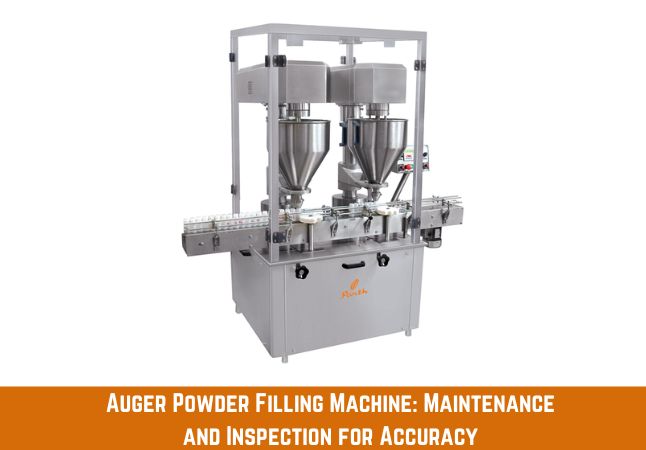
The auger powder filling machine relies on a precision-machined auger screw to deliver accurate fill weights. Over time, fine particles compact inside the screw flights, leading to clogging, dose variation and gradual screw surface erosion that compromises the powder filling machine's output consistency.
After each production batch, disassemble the auger screw, hopper and discharge cone. Wash all product-contact surfaces with validated cleaning agents suitable for your powder type - pharmaceutical-grade CIP (clean-in-place) protocols apply on regulated powder filling lines. Inspect the auger screw for flat spots, wear on the helix or hairline cracks. Even minor surface changes alter volumetric flow rates within the auger powder filling machine. Replace worn screws immediately rather than adjusting dosing parameters to compensate - the latter masks the underlying mechanical issue.
Dry Powder Filling Machine: Controlling Static and Dust Accumulation
Electrostatic charge is a persistent challenge in any dry powder filling machine, especially when handling lightweight or hydrophobic powders. Static causes powder bridging inside hoppers, product sticking to surfaces and inaccurate fill weights - all of which disrupt dry powder filling line efficiency.
Install anti-static brushes or ionising bars at feed entry points. Clean internal surfaces using appropriate anti-static wipes during scheduled production stops. Check grounding connections on all metal components weekly - a loose earth connection generates enough charge to destabilise even a well-calibrated dry powder filling machine. For lines processing multiple product types, residual dust poses a serious cross-contamination risk. Each changeover cleaning cycle on the dry powder filling line must be validated to confirm zero carryover before the next product run begins.
Our Other Product
Tube Filling MachinePowder Filling Sealing Machine: Sealing Element Maintenance
In a combined powder filling sealing machine, the sealing station is where reliability issues typically surface first. Heat sealing elements degrade with repeated thermal cycling, pressure settings drift with mechanical wear and jaw alignment shifts gradually - all of which compromise the sealing integrity that defines this machine's core function.
Inspect sealing wires or bands at the start of each shift for discolouration, surface cracking or uneven wear. Test seal integrity daily using a seal integrity tester or peel test on sample pouches produced by the powder filling sealing machine. Check jaw alignment monthly - even a 0.5 mm offset creates structurally weak seals that pass visual checks but fail under real distribution conditions. Replace PTFE coating on sealing jaws before visible degradation begins, not after seal failures occur on the production floor.
Powder Injection Filling Line: Maintaining Sterility and Component Integrity
The powder injection filling line operates under the strictest standards, with HEPA-filtered environments, stopper bowl systems and nitrogen purging as standard requirements. Maintenance here carries a direct patient safety dimension that distinguishes it from other filling formats.
Inspect stopper bowl vibration settings and liner surfaces for abrasion regularly - damaged liners on the powder injection filling line release particulates directly into product vials. Validate sterilisation cycles for all contact parts after each overhaul. Verify nitrogen purge flow rates, as reduced flow on an injectable dry powder filling machine compromises residual oxygen levels inside sealed vials. Ensure vial transport mechanisms are correctly aligned to prevent glass-to-glass contact, which generates particulates that threaten container closure integrity across the entire injectable dry powder filling line.
Powder Filling Machine Line: Lubrication Management
Improper lubrication is among the leading causes of unexpected breakdowns across a powder filling machine line. Over-lubrication introduces contamination risk near product-contact zones; under-lubrication accelerates wear on bearings, cams and gearboxes that drive every powder filling machine in the line.
Use only food-grade or pharma-grade lubricants as specified in the machine's technical manual. Create a lubrication map for the entire powder filling line, identifying every point, the correct lubricant grade and reapplication intervals. Train maintenance personnel to distinguish between normal seepage and active leakage that requires immediate attention. Parth Engineers & Consultant recommends reviewing lubricant viscosity grades seasonally, since ambient temperature changes affect performance in open-floor facilities running powder filling machines at high cycle rates.
Dry Powder Filling Line: Sensor Calibration and Control System Checks
A dry powder filling line depends on load cells, proximity sensors and HMI-driven control systems to maintain fill accuracy and synchronisation between stations. Sensor drift is gradual and often goes unnoticed until fill weight deviations exceed specification limits on the dry powder machine, triggering batch rejections.
Calibrate load cells against certified reference weights every four weeks or after any mechanical impact to the weighing platform on the powder filling machine. Test proximity sensor response times and adjust sensitivity thresholds if production cycle speeds have changed. Back up PLC programmes monthly and store copies off-machine - a corrupted programme after a power fluctuation on a dry powder filling line without a backup can cause days of unplanned downtime during reprogramming and revalidation.
Powder Filler Machine: Spare Parts Management
Reactive maintenance on a powder filler machine is always more expensive than planned replacement. A well-stocked spare parts inventory ensures that wear items are swapped on a schedule rather than during a production crisis that halts the powder filling machine line entirely.
Identify the ten most failure-prone components across your powder filling machines - typically auger screws, seals, O-rings, drive belts and sealing elements - and maintain minimum stock levels for each. Parth Engineers & Consultant, as a trusted suppliers to source OEM-approved replacement parts for your specific powder filler machine model. Non-OEM parts may reduce upfront costs but frequently introduce dimensional inconsistencies that void warranties and create new failure points elsewhere in the powder filling line.

Conclusion
Reliable performance from a powder filling line - whether handling dry powder, injectable formulations or sealed sachets - results from disciplined, documented and proactive maintenance practices. From auger inspection and static control on the dry powder filling machine to sterility validation on the injectable dry powder filling line and spare parts planning for the powder filler machine, each step directly reduces unplanned stoppages and extends equipment service life. Parth Engineers & Consultant supports manufacturers with maintenance guidance, OEM spare parts and technical expertise to keep every powder filling machine operating at peak efficiency throughout its entire service lifespan.

