

For Export Enquiry


Call Us
Auger Type Powder Filling Machine Price Factors: What Impacts Cost and What You Actually Need
Share At:





Listen to the Audio Version
Auger Type Powder Filling Machine Price Factors
When you start exploring packaging equipment, one question hits first - how much does it cost? And if you're looking into powder packaging solutions, understanding what shapes the price can save you from overspending or underinvesting. The truth is, the cost of an auger type powder filling machine isn’t just a number on a quotation sheet. It’s a reflection of technology, precision, build quality, customization and your actual production needs.
Let’s break it down in a practical, no-fluff way so you can understand what really impacts the investment - and what you genuinely need versus what just looks impressive on paper.
Auger Filling Machine Price Structure and Basic Cost Components
An auger filling machine is widely used in industries that handle powders - food, pharmaceuticals, chemicals, cosmetics and more. But the price can vary dramatically depending on its configuration and purpose.
At its core, the cost is influenced by:
- Machine structure and material (MS frame, stainless steel body, GMP finish)
- Filling mechanism and drive system (servo motor vs. clutch-based)
- Automation level (semi-automatic or fully automatic)
- Number of filling heads
- Output capacity per minute
- Control system (PLC, HMI, touchscreen interface)
A semi-automatic tabletop model will naturally cost far less than a fully automatic, multi-head system integrated with conveyors and bottle handling units. The difference isn’t just size - it’s productivity, accuracy and efficiency.

Auger Powder Filling Machine Build Quality and Material Selection
An auger powder filling machine isn’t just about mechanics - it’s about durability and compliance. The materials used in construction directly impact price.
Most machines feature:
- Mild steel (MS) frames
- Stainless steel contact parts (SS 304 or SS 316)
- Full stainless steel enclosures for hygienic environments
If you’re working in the food or pharmaceutical sector, stainless steel isn’t optional - it’s essential. A fully enclosed stainless body ensures hygiene, easy cleaning and regulatory compliance.
Servo-driven systems also cost more than clutch-driven ones because they offer higher precision, better speed control and less mechanical wear. In industries where dosing accuracy matters (like nutraceuticals or pharma powders), this precision justifies the added cost.
The difference in build quality can impact long-term maintenance. A cheaper machine with lower-grade components may save money upfront but cost more in repairs and downtime later.
Read Our Article
Auger Type Powder Filling MachineAuger Type Powder Filling Machine Filling Accuracy and Precision Control
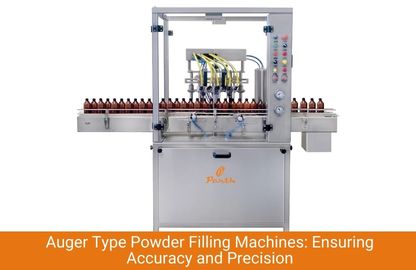
Precision is one of the defining features of an auger type powder filling machine. The auger screw rotates and dispenses powder based on pre-set parameters. But the accuracy depends on:
- Motor type (servo vs. standard motor)
- PLC and timer settings
- Powder characteristics (free-flowing vs. non-free-flowing)
- Screw design and pitch
High-accuracy auger powder filling machines cost more because they incorporate advanced control systems. Servo motors, for example, provide better repeatability and consistent dosing compared to mechanical clutch systems.
If your product is high-value - like protein powder, spices, pharmaceutical blends - underfilling or overfilling leads to financial loss or compliance issues. Investing in higher precision can reduce product wastage significantly.
However, for low-cost powders used in bulk industrial applications, ultra-precision may not be necessary. Paying extra for ±0.2% accuracy when ±1% is acceptable could be unnecessary. The real value lies in understanding your tolerance limits.
Auger Powder Filler Machine Production Capacity and Speed Requirements
Capacity and speed are directly proportional to price. An auger powder filler machine designed to handle 20 containers per minute will cost far less than one capable of 120 per minute.
Speed is influenced by:
- Number of filling heads
- Bottle handling systems
- Conveyor synchronization
- Hopper capacity
- Auger diameter
A larger hopper reduces frequent refilling but increases machine size and cost. Similarly, high-speed operations require robust drives and advanced control systems.
If your production demand is seasonal or moderate, investing in maximum speed may not be cost-effective. On the other hand, if you operate in a competitive retail market where high-volume output determines profitability, higher speed becomes essential.
The best approach? Calculate your monthly production target and choose a machine with slightly higher capacity than your current requirement - allowing room for growth without excessive investment.
Our Other Product
Automatic Horizontal Cartoning MachineAuger Powder Filler Customization and Application-Specific Design
Customization significantly impacts pricing. A standard auger powder filler machine is more affordable, but modifications increase costs.
Common customization areas include:
- Dust collection systems
- Nitrogen flushing for sensitive powders
- Anti-bridging mechanisms for sticky materials
- Special screw designs for difficult powders
- Integration with capping and labeling systems
For example, powders that are hygroscopic or prone to clumping may require agitation systems inside the hopper. That adds engineering complexity and cost.
In pharmaceutical environments, validation-ready designs and compliance documentation can also influence pricing.
Customization should be driven by necessity, not preference. Every additional feature should solve a real production challenge - not just enhance specifications.
Auger Powder Filling Machine Compliance and Industry Regulations
Regulatory compliance affects cost significantly. Industries like pharmaceuticals require machines that meet strict hygiene and safety standards.
Compliance features may include:
- GMP design
- Tool-less dismantling for cleaning
- Validation documentation (IQ/OQ/PQ)
- CE certification
- FDA-compliant materials
Machines built to meet these standards are priced higher due to engineering precision and documentation requirements.
If you’re operating in a regulated industry, compliance isn’t optional - it’s mandatory. Skipping these features can result in penalties or product recalls.
However, if you're filling industrial powders without strict regulatory requirements, you may not need a fully compliant pharmaceutical-grade system.
Auger Type Powder Filling Machine Integration with Complete Packaging Lines
Sometimes the cost isn’t just about the filling unit itself. Integration into a full packaging line affects the overall budget.
A standalone auger type powder filling machine costs less than a fully synchronized system integrated with:
- Bottle unscramblers
- Conveyors
- Capping machines
- Induction sealers
- Labeling machines
Integrated systems improve efficiency and reduce manual handling. But they require control synchronization and programming, increasing initial investment.
If you’re building a new plant, line integration makes sense. If you're upgrading an existing setup, adding a standalone filler might be more practical.

What You Actually Need vs. What Looks Impressive
It’s easy to get drawn into advanced specifications. Dual heads, ultra-high speed, complex interfaces - it all sounds impressive.
But here’s the honest question: Will you use all of it?
Ask yourself:
- What is my daily output requirement?
- What accuracy tolerance do I need?
- What powder characteristics am I dealing with?
- What compliance standards must I meet?
- How much future expansion do I realistically expect?
Buying oversized equipment ties up capital unnecessarily. Buying undersized equipment restricts growth.
The right investment sits comfortably between present needs and near-future scalability.
Conclusion
The price of an auger type powder filling machine is shaped by automation level, build quality, accuracy, speed, customization, compliance and integration requirements. There isn’t a single “standard” cost because every production setup is different.
The smartest approach isn’t chasing the lowest price or the highest specification - it’s aligning machine capabilities with operational reality. When you evaluate based on production goals, powder type, compliance needs and long-term service support, the right investment becomes clear.
Make the decision strategically, not emotionally. The right machine won’t just fill containers - it will support efficiency, consistency and growth.
Our Other Product
Automatic Air Jet Bottle Air and Vacuum Bottle Cleaning MachineFAQs on Auger Type Powder Filling Machine
Automation level, accuracy system and production capacity are the biggest pricing factors.
They handle most free-flowing and non-free-flowing powders, but screw design may vary based on material behavior.
Yes, if you require high precision and consistent dosing, especially for high-value products.
Yes, it can synchronize with conveyors, capping and labeling systems for complete automation.
Match machine capacity, accuracy and compliance features with your current production needs and realistic growth plans.
About Author
We provide 24 x 7 Customer
Service & Support


Copyright © 2026, Parth Engineering & Consultant ( India ).
Web Design by Opal Infotech