

For Export Enquiry


Call Us
Injectable Liquid Vial Filling Machine: How to Monitor Nitrogen Purging Performance During Routine Production
Share At:





Listen to the Audio Version
Injectable Liquid Vial Filling Machine: Nitrogen Purging Performance During Production
In sterile pharmaceutical manufacturing, nitrogen purging is not just a secondary process - it’s a silent guardian. Whether you’re operating an injectable liquid vial filling machine or managing a full-scale production line, controlling oxygen levels inside vials directly impacts product stability, shelf life and patient safety.
During routine production, nitrogen purging must perform consistently. Even slight deviations can affect oxidation-sensitive formulations. So, how do you monitor nitrogen purging performance effectively without disrupting throughput? Let’s break it down in a practical, production-floor-focused way.
Injectable Vial Filling Machine: Why Nitrogen Purging Matters in Sterile Production
An injectable vial filling machine is designed to deliver precise volumes of sterile liquid into depyrogenated vials under aseptic conditions. But filling accuracy alone isn’t enough. If oxygen remains inside the vial headspace, sensitive drugs - like biologics or antibiotics - can degrade over time.
Nitrogen purging replaces oxygen in the vial with inert gas before and/or after filling. This process:
- Reduces oxidative degradation
- Extends product shelf life
- Maintains chemical stability
- Enhances regulatory compliance
In routine production, the nitrogen purging system must synchronize perfectly with filling and stoppering. When the system drifts - due to pressure variation, nozzle misalignment, or gas flow fluctuation - oxygen levels can increase silently. That’s why monitoring isn’t optional; it’s critical.
Think of nitrogen purging like a seatbelt in a car. You may not notice it every second, but you definitely want it functioning perfectly when it matters.

Injectable Vial Filing Line: Integration of Nitrogen Control Across the Line
In a modern injectable vial filing line, nitrogen purging is not isolated to one station. It’s integrated across multiple phases:
- Pre-filling purging
- Post-filling headspace flushing
- Stoppering under nitrogen blanket
A complete line often includes washing, sterilization tunnel, filling, stoppering and capping. The challenge? Ensuring nitrogen performance remains consistent across each station.
Monitoring should include:
- Inline oxygen analyzers
- Pressure sensors at nitrogen inlet points
- Flow meters with digital logging
- PLC-based alarm thresholds
When nitrogen supply pressure fluctuates, it can cause uneven purging. In high-speed lines, even milliseconds matter. If synchronization between gas injection and filling cycle is lost, oxygen displacement becomes inconsistent.
Routine production monitoring should include hourly or batch-wise oxygen validation checks to ensure compliance with predefined specifications.
Injectable Vial Filling Line: Real-Time Monitoring Techniques
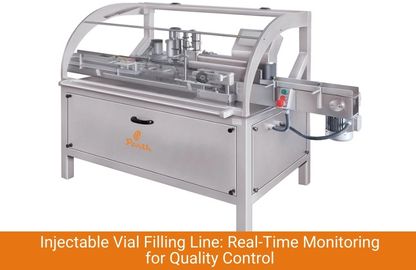
An injectable vial filling line equipped with servo-driven systems and PLC controls offers better nitrogen management. Real-time monitoring ensures that performance deviations are detected before product quality is affected.
Key real-time techniques include:
Inline Oxygen Sensors
Installed near the purging station, these sensors measure residual oxygen in the headspace. Acceptable limits, depending on product sensitivity.
Nitrogen Flow Monitoring
Mass flow meters help confirm that the correct gas volume enters each vial. Any drop in flow rate should trigger an alarm.
Pressure Monitoring
Maintaining stable nitrogen pressure ensures uniform purging. Sudden pressure drops can indicate leaks or regulator malfunction.
PLC Data Logging
Modern systems record nitrogen parameters continuously. Reviewing these logs during routine production helps identify subtle trends before they escalate.
Consistency is the goal. Nitrogen purging should behave like a metronome - steady, predictable and precise.
Our Other Product
Injectable Powder Filling Machine (Automatic Servo Base Filler)Injectable Liquid Filling Machine: Synchronization between Filling and Purging
An injectable liquid filling machine typically works on volumetric principles with servo-driven syringe assemblies. Nitrogen purging must synchronize with the filling stroke to maintain efficiency.
Here’s how monitoring aligns with machine operation:
- Nitrogen pre-flush occurs before the syringe discharge
- Filling stroke follows, controlled by servo mechanism
- Post-fill nitrogen flush reduces residual oxygen
- Stoppering occurs under controlled atmosphere
If the servo timing shifts - even slightly - nitrogen injection may become mistimed. That’s why monitoring should include:
- Servo stroke position verification
- Nitrogen timing validation through PLC
- Periodic cycle observation during production
Routine audits during shifts ensure synchronization remains intact. It’s not enough to set parameters once; performance verification must be continuous.
Injectable Liquid Filling Machine Manufacturer: Design Considerations for Effective Monitoring
An experienced injectable liquid filling machine manufacturer integrates nitrogen monitoring systems directly into machine architecture. Design factors that support better monitoring include:
- Enclosed stainless-steel construction to prevent contamination
- Self-centering vial mechanisms for accurate nozzle positioning
- No-vial-no-filling interlock systems
- Integrated gas flow control modules
Manufacturers often include digital HMI interfaces where operators can monitor:
- Nitrogen flow rate
- Gas pressure
- Alarm history
- Batch-wise oxygen data
During routine production, operator-friendly dashboards improve response time. A good design doesn’t just fill vials - it makes monitoring intuitive and reliable.
Injectable Liquid Filling Line: Standard Operating Procedures for Routine Monitoring
In an injectable liquid filling line, SOPs define how nitrogen purging performance is validated. Routine production checks typically include:
Start-Up Validation
- Confirm nitrogen cylinder or bulk supply pressure
- Calibrate oxygen analyzer
- Verify flow rate settings
In-Process Monitoring
- Hourly oxygen headspace testing
- Pressure log verification
- Visual check of gas nozzles
End-of-Batch Review
- Review PLC data logs
- Document deviations
- Inspect gas filters
These routine steps prevent unnoticed drift. Monitoring should feel systematic - not reactive.
Injectable Liquid Filler Machine: Preventive Maintenance for Nitrogen Systems
An injectable liquid filler machine requires periodic maintenance of its nitrogen components.
Routine tasks include:
- Cleaning gas nozzles
- Checking pressure regulators
- Replacing inline gas filters
- Verifying calibration of flow meters
Preventive maintenance prevents unexpected downtime and ensures nitrogen purging remains stable during high-speed operations.

Injectable Liquid Filler: Best Practices for Continuous Performance Assurance
An injectable liquid filler must operate under validated conditions. Best practices for monitoring nitrogen purging include:
- Training operators on gas flow interpretation
- Establishing clear deviation limits
- Maintaining spare calibrated sensors
- Conducting periodic performance audits
Ultimately, nitrogen purging performance reflects overall system discipline. A well-monitored process builds confidence - not just in equipment, but in product quality.
Conclusion
Monitoring nitrogen purging performance during routine production is essential for maintaining sterility, product stability and regulatory compliance. Whether operating an injectable vial filling machine or managing a complete automated line, consistent gas flow, pressure stability, oxygen analysis and synchronization with filling and stoppering phases are critical.
Modern systems equipped with servo drives, PLC controls and inline oxygen sensors make monitoring more precise and data-driven. However, technology alone isn’t enough. Routine checks, preventive maintenance and proper SOP implementation ensure nitrogen purging remains effective throughout every batch.
In sterile manufacturing, details define quality. Nitrogen purging may seem invisible - but its performance determines whether your injectable product stands the test of time.
Our Other Product
Injectable Liquid Filling & Stoppering Machine (Servo Base)FAQs on Injectable Liquid Vial Filling Machine
Nitrogen purging reduces oxygen levels inside vials, preventing oxidation and extending product shelf life.
Different Levels are typically checked at start-up, hourly during production and at the end of each batch.
Inline oxygen analyzers, mass flow meters, pressure sensors and PLC logging systems are commonly used.
Yes, if stoppering occurs outside a nitrogen-controlled environment, oxygen can re-enter the vial headspace.
High residual oxygen levels, inconsistent pressure readings and flow rate fluctuations indicate potential issues.
About Author
We provide 24 x 7 Customer
Service & Support


Copyright © 2026, Parth Engineering & Consultant ( India ).
Web Design by Opal Infotech