

For Export Enquiry


Call Us
Key Questions to Ask About Injectable Liquid Vial Filling Machine Performance in Real Production
Share At:





Listen to the Audio Version
Injectable Liquid Vial Filling Machines: Performance, Accuracy & Compliance Checklist
This article explores the essential performance-related questions that pharmaceutical manufacturers should ask when evaluating an injectable liquid vial filling machine for real production settings. The focus is on efficiency, accuracy, compliance and machine capability, helping companies make informed decisions that ensure smooth operations and consistent output.
Understanding the Real-World Role of Injectable Vial Filling Machines
The pharmaceutical industry demands precision, sterility and consistency - especially when it comes to injectable products. The injectable vial filling machine plays a pivotal role in achieving these goals by accurately dispensing liquid medications into vials under aseptic conditions. However, performance in a real production environment can vary depending on a range of factors including design, speed, integration capability and maintenance requirements.
Before purchasing or upgrading equipment, it’s important to move beyond spec sheets and explore how the machine actually performs on the production floor. Are there frequent downtimes? Is the accuracy consistent during extended runs? These are the types of questions that uncover the machine’s true capabilities.
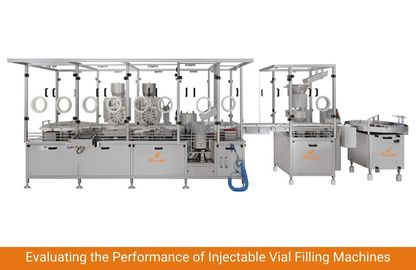
Injectable Liquid Filling Machine Functionality in Real-Time Operation
When you evaluate an injectable liquid filling machine for real-world performance, it’s not just about how fast it fills. Instead, consider how consistently it operates across shifts, how it handles different liquid viscosities and whether it integrates seamlessly with upstream and downstream equipment. Real-time operation demands not only speed but also reliability under pressure.
Performance can significantly differ from lab testing environments. Operators must ask: How does the machine react under full load? Does the volumetric accuracy remain intact after extended hours of operation? Answers to these questions can expose potential bottlenecks and quality risks early on.
Injectable Liquid Filling Line: Is the System Truly Scalable?
As production demands grow, so does the need for scalability. An injectable liquid filling line should allow for adjustments in batch sizes, container types and even product formulations without requiring major equipment overhauls.
True scalability is about flexibility. It's critical to question whether your current setup or a new investment can handle tomorrow's production targets. Does the system allow for modular expansion? Can it integrate with newer inspection or labeling technologies? These scalability considerations should be at the forefront of any decision-making process.

Injectable Liquid Filing Line and its Role in Regulatory Compliance
Compliance is a non-negotiable in pharma manufacturing. An injectable liquid filing line must meet stringent GMP and FDA requirements. But beyond documentation, how does the equipment actually support compliance in daily operations?
Think about ease of cleaning, validation processes and the accuracy of fill volume records. Ask if the machine has automated features that reduce human intervention and the possibility of error. Ensuring the system supports electronic records or audit trails is equally important in today’s regulatory landscape.
Injectable Liquid Vial Filling Machine Downtime: What’s Causing It?
Downtime is one of the most expensive issues in pharmaceutical production. Whether caused by mechanical issues, operator errors or product-related problems, the impact is the same - production delays and potential losses.
Ask: What are the most common causes of downtime on the injectable liquid vial filling machine? Is there a trend with certain components wearing out too soon? Does the control system offer predictive maintenance features? Investigating these angles helps uncover hidden inefficiencies and improve uptime.
Our Other Product
Automatic Servo Base Volumetric Liquid Filling MachineInjectable Liquid Vial Filling & Stoppering Machine Integration Challenges
Integration is key in modern filling lines. A high-performance injectable liquid vial filling & stoppering machine should not only fill accurately but also seal the vials seamlessly, all while syncing with conveyors, cappers and labeling units.
When machines are from different manufacturers, integration can become a nightmare. Compatibility issues often lead to sync errors, downtime and inconsistent output. Be sure to ask how well the machine communicates with other components of the line. Does it support industry-standard protocols? Are there custom integration tools provided?
Injectable Liquid Vial Filling Line Maintenance
Maintenance often determines the long-term viability of any machine. For an injectable liquid vial filling line, regular and preventive maintenance can make the difference between smooth production and recurring breakdowns.
What does the maintenance routine look like? Can in-house staff handle it or is specialized expertise required? Understanding the complexity of the machine and the availability of spare parts or service support is critical for planning long-term operations.
Injectable Liquid Filler Machine Accuracy: Is It Consistent Across All Batches?
Accuracy isn’t a one-time metric - it’s a continuous performance indicator. An injectable liquid filler machine should offer consistent accuracy, regardless of product viscosity, vial size or production speed.
How does the machine manage micro-variations in liquid composition? Is the dosing system volumetric, peristaltic or piston-based? Each has its pros and cons. Checking historical performance reports can provide insight into how the filler maintains accuracy across different production cycles.
Injectable Liquid Filler Cleanability: How Easy is it to Sanitize the System?
In pharmaceutical environments, cleanability isn’t just a preference - it’s a requirement. An injectable liquid filler must be easily cleanable to avoid contamination risks between batches.
Ask about CIP (Clean-In-Place) or SIP (Sterilization-In-Place) capabilities. Are these processes automated or manual? How much downtime is required for cleaning? The answers can help determine how efficiently the system can switch between different drug products while maintaining aseptic integrity.
Injectable Liquid Filling Machine Manufacturer: Why Partnering Matters
Choosing the right injectable liquid filling machine manufacturer is as critical as the machine itself. A reliable manufacturer ensures quality, provides technical support and offers timely upgrades or spare parts.
Parth Engineers & Consultant is a well-established name in this domain. Since 1995, the company has been producing high-quality packaging machinery tailored for the pharmaceutical sector. Located in Ahmedabad, Gujarat, they’ve built a strong reputation for delivering efficient and robust solutions across various packaging needs - including washing, filling, sealing and labeling.
Our vast experience, combined with a commitment to innovation, has helped them serve both domestic and international clients. Whether you're looking for a complete injectable line or a standalone filling unit, Parth Engineers offers tailor-made solutions backed by strong after-sales support.
Injectable Vial Filling Machine Flexibility: Can It Adapt to Different Products?
In real production, you may have to switch between products quickly. A good injectable vial filling machine must be adaptable to different formulations, vial sizes and fill volumes.
How complex is the changeover process? Does it require new tooling or can it be done with minimal adjustments? Flexibility in this context directly affects production scheduling and resource management. Look for features like tool-less changeovers or programmable settings that allow for rapid adjustments.

Injectable Liquid Filling Line Automation
Automation isn't just about reducing manpower; it’s about enhancing efficiency and traceability. A smart injectable liquid filling line uses sensors, software and control systems to monitor performance in real-time.
Does the machine alert operators to anomalies? Can it adjust parameters automatically when deviations are detected? Asking these kinds of questions can help you understand whether the automation is superficial or truly intelligent.
Injectable Liquid Filling Machine Support: What Happens After Purchase?
Post-purchase support is often the true test of a injectable liquid filling machine manufacturer. Are technical teams available on short notice? Is remote assistance an option? What is the turnaround time for spare parts?
Asking these questions helps prevent surprises down the road. Some manufacturers, like Parth Engineers & Consultant, offer comprehensive support that includes installation, training, spare parts inventory and periodic servicing - making them a trusted partner, not just a vendor.
Injectable Liquid Vial Filling Machines: Investing in Accuracy, Compliance and Reliability
The real-world performance of an injectable liquid vial filling machine goes far beyond its datasheet. From accuracy and compliance to flexibility and support, it’s the hidden variables that determine long-term success in pharmaceutical production. By asking the right questions - and demanding answers that reflect real production conditions - you can avoid costly mistakes and ensure your production line operates at peak performance.
Whether you're scaling up, upgrading or starting fresh, remember: It’s not just about buying a machine. It’s about investing in reliability, quality and a long-term partnership. Choose wisely. Ask deeply.
FAQs on Injectable Liquid Vial Filling Machine
It accurately fills liquid medications into vials under sterile conditions in pharmaceutical production.
It uses precision dosing systems like piston or peristaltic pumps to maintain consistent fill volumes.
Yes, most advanced machines offer quick changeover features for various vial dimensions.
Frequent issues include nozzle clogging, inconsistent fill volumes and integration challenges with other equipment.
A trusted manufacturer ensures long-term support, quality components and compliance with pharmaceutical standards.
About Author
We provide 24 x 7 Customer
Service & Support


Copyright © 2026, Parth Engineering & Consultant ( India ).
Web Design by Opal Infotech