







AI Summary
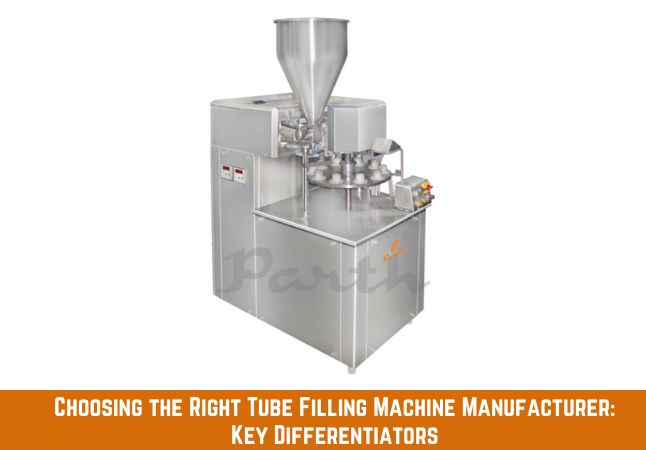
Semi-automatic tube filling and sealing machines occupy the ideal middle ground between manual operations and fully automated lines. They deliver consistent fill accuracy, sealing quality and throughput for small to mid-scale producers without the capital burden of complete automation. Parth Engineers & Consultant designs and supplies these machines with configurable output speeds and multi-format compatibility, making them a practical investment for cosmetic, pharmaceutical and food packaging operations.
Tube Filling Machine: Understanding the Production Scale Gap
Tube filling machine selection directly impacts a manufacturer's operational cost, output quality and scalability path. For businesses producing between 1,500 and 6,000 tubes per shift, a fully automatic tube filling machine introduces capital expenditure that rarely justifies itself at current volumes, while purely manual processes create inconsistency, slower throughput and higher labour dependency.
A semi automatic tube filling and sealing machine closes this gap precisely. It combines operator-guided loading with automated fill-and-seal cycles, giving small to mid-scale producers the accuracy of automation where it matters most - dosing and sealing - without eliminating the human oversight that keeps product changeovers fast and flexible.

Semi Automatic Tube Filling Machine: How It Positions Within a Production Strategy
A semi automatic tube filling machine is not a compromise - it is a deliberate production choice. In contract manufacturing, where batch sizes shift weekly and SKUs vary by client, a semi-automatic setup allows operators to switch between tube diameters, fill volumes and sealing styles within a single shift. This agility is difficult to replicate on a fully automatic tube filling machine without investing in format parts and extended changeover time.
For export-oriented MSME manufacturers, dermatology clinics producing white-label products or mid-sized FMCG brands managing seasonal SKUs, the semi-automatic configuration reduces idle capacity losses. A machine running at 60–70% utilisation on a high-volume fully automatic line costs significantly more per tube than a semi-automatic unit operating at near-full capacity for its designed throughput range.
Read Our Article
All About Filling Machines For Bottle & TubeTube Filling Machine Manufacturers: What Differentiates Serious Suppliers
Not all tube filling machine manufacturers deliver the same engineering depth. The differentiators that production managers should evaluate include:
Filling system accuracy - whether the machine uses servo-driven piston filling or pneumatic dosing and what the repeatability tolerance is across viscous and semi-viscous products like creams, gels, ointments and pastes.
Sealing technology - hot air sealing, hot jaw sealing and ultrasonic sealing each suit different tube materials (aluminium, HDPE, LDPE, laminated). A credible tube filling machine supplier will map sealing method to tube substrate during the sales consultation, not after delivery.
Parth Engineers & Consultant, as a reliable manufacturer with multi-decade experience in packaging machinery, offers semi-automatic tube fillers built around stainless steel contact parts, GMP-compliant construction and adjustable fill volumes from 3 ml to 250 ml. Their machines are designed specifically for pharmaceutical, cosmetic and food-grade tube packaging, with configurations supporting both aluminium and plastic tube formats.
Read Our Article
Cartoning MachineTube Filler Machine: Core Mechanical Considerations for Mid-Scale Lines
When specifying a tube filler machine for mid-scale production, the mechanical architecture matters beyond the headline output speed. Key considerations include:
Nozzle dive mechanism - A nozzle that descends into the tube during filling prevents air entrapment and product splatter, which is critical for filled weights above 50g and for gas-sensitive formulations.
Tube holder design - Adjustable tube holders that accommodate multiple diameters without additional tooling reduce changeover time and tooling investment. Multi-format production lines particularly benefit from this.
Sealing jaw clearance and temperature control - Consistent sealing quality on plastic and laminated tubes requires PID-controlled jaw temperature and sufficient dwell time. Machines without independent temperature zones frequently produce weak seals on thicker tube shoulders.
Batch coding integration - A semi-automatic unit that supports hot foil stamping or inkjet batch printing inline removes a secondary handling step, which matters for compliance with pharmaceutical serialisation norms.
Parth Engineers & Consultant integrates these specifications into their standard tube filler configurations, with optional add-ons for nitrogen flushing, CIP-compatible nozzle assemblies and date/batch coding stations.

Tube Filling Line: Designing a Flexible Semi-Automatic Setup
A tube filling line at the semi-automatic scale typically consists of three functional zones: pre-filling preparation, fill-and-seal and post-seal handling. For small to mid-scale producers, these zones do not need to be fully conveyor-linked - a well-designed semi-automatic layout supports operator movement between zones while maintaining a target output of 1,500–4,500 tubes per hour depending on tube size and product viscosity.
Compared to a fully automatic tube filling machine that demands consistent upstream tube feeding and downstream cartoning alignment, a semi-automatic tube filling line tolerates variability in upstream supply without line stoppages. This is operationally significant for manufacturers running two or three SKUs per shift without dedicated product lines.
Parth Engineers & Consultant configures tube filling lines for standalone semi-automatic operations as well as hybrid setups where the semi-automatic filling station feeds into automatic labelling or cartoning equipment - a cost-effective upgrade path for growing manufacturers.
Automatic Single Tube Filling Machine: When Semi-Automatic Beats Single-Tube Manual
An automatic single tube filling machine operates on a one-tube-per-cycle basis with automated indexing and sealing, making it faster than fully manual filling but still positioned below multi-head automatic lines. For manufacturers currently using manual syringes or bench-top dispensers, stepping up to even an automatic single tube filling machine delivers measurable gains in dosing consistency, sealing integrity and operator fatigue reduction.
The practical difference between an automatic single tube filling machine and a multi-station semi-automatic unit lies in throughput ceiling and format flexibility. Single-tube automatics typically target 600–1,200 tubes per hour. A semi-automatic multi-station machine from Parth Engineers & Consultant can reach 3,000–4,500 tubes per hour with two operators, making it better suited for growing production demands without committing to full automation.
Tube Filling Machine Supplier: Evaluating After-Sales and Technical Support
Choosing the right tube filling machine supplier is as important as the machine specification itself. Factors that determine long-term operational value include spare parts availability, response time for service calls and the supplier's ability to provide application trials before purchase.
Parth Engineers & Consultant operates with a direct technical support model, offering machine demonstration at their facility for prospective buyers to run trials with their own product formulations. This pre-purchase validation reduces post-installation surprises around fill accuracy, sealing quality and machine compatibility with specific tube materials.
Their after-sales support includes operator training, preventive maintenance schedules and a documented spare parts programme - elements that matter significantly when a machine operates two to three shifts per day in a production environment without in-house engineering resources.
Conclusion
Semi-automatic tube filling and sealing machines deliver the precision of automated dosing and sealing at a capital cost and operational flexibility that suits small to mid-scale production realities. For manufacturers navigating multi-SKU batches, seasonal volume variation or constrained floor space, these machines outperform both manual setups and over-specified fully automatic lines on cost-per-tube economics. Parth Engineers & Consultant's range of semi-automatic tube fillers, backed by application-specific engineering and direct after-sales support, offers a dependable production investment for pharmaceutical, cosmetic and food packaging manufacturers ready to scale with confidence.

