

For Export Enquiry


Call Us
Chemical & Lubricant Bottles Labeling: Reliable Wrap-Around Labeling for Tough Environments
Share At:





Listen to the Audio Version
Bottles Labeling in Chemical & Lubricant Industry for Tough Environments
In the chemical and lubricant industry, labeling is not just about branding - it’s about durability, compliance and safety. Bottles filled with engine oils, solvents, greases, industrial fluids and corrosive chemicals are often exposed to extreme temperatures, moisture, oil splashes and rough handling. In such demanding conditions, ordinary labels simply don’t survive.
Let’s explore how advanced labeling and filling technologies make this possible - and why choosing the right machinery can transform your packaging line.
Bottle Filling Machine Solutions for Chemical Accuracy and Safety
In chemical and lubricant production, precision is everything. A bottle filling machine ensures accurate volumetric or gravimetric filling, reducing wastage and maintaining consistency across batches. Even slight variations in fill levels can create compliance issues or customer dissatisfaction.
Modern systems are designed to handle liquids of varying viscosities - from thin solvents to thick gear oils. These machines use specialized nozzles that prevent dripping, foaming, or spillage, which is particularly important when dealing with hazardous substances. Anti-corrosion components and stainless-steel construction further enhance durability in tough environments.
What makes today’s equipment stand out is its adaptability. Adjustable filling parameters allow manufacturers to switch between product types without extensive downtime. That flexibility matters when production lines handle multiple SKUs.
Moreover, integrating the filling system with labeling ensures a seamless workflow. Bottles are filled precisely before moving to the labeling station, minimizing contamination risks. When accuracy meets durability, production becomes smoother, safer and far more efficient.
Bottle Filling Machines Designed for High-Volume Lubricant Production
Scaling operations in the lubricant sector requires robust bottle filling machines capable of maintaining speed without sacrificing precision. High-output facilities often process thousands of containers per hour, making automation essential.
These machines are engineered with heavy-duty pumps, servo-driven controls and programmable logic systems. The result? Consistent performance even during extended production cycles. For industries dealing with motor oils and industrial fluids, this reliability directly impacts profitability.
Another key factor is compatibility with different bottle sizes and shapes. Quick changeover mechanisms enable manufacturers to shift from 500 ml containers to 5-liter jugs with minimal interruption. Reduced downtime equals increased output.
Additionally, advanced sensors monitor fill levels in real time, preventing underfilling or overfilling. This not only saves raw materials but also enhances brand credibility. When production demands are high and the environment is unforgiving, reliable filling technology becomes the backbone of the entire operation.
Bottle Labeling Machine Performance in Harsh Industrial Conditions
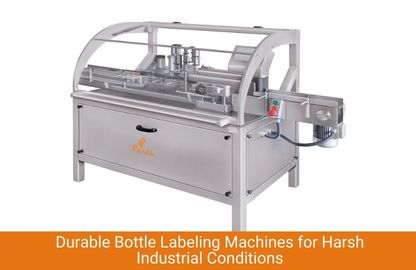
Once filled, bottles must be labeled with precision. A bottle labeling machine built for chemical applications goes beyond basic adhesive application. It ensures strong label adhesion even when containers are exposed to oil residue, moisture, or temperature fluctuations.
In wrap-around applications, the system aligns labels perfectly around cylindrical surfaces. Advanced sensors detect container positioning and trigger accurate label dispensing. This precision prevents wrinkles, air bubbles, or misalignment.
For chemical manufacturers, durability is crucial. Stainless steel frames and sealed electrical panels protect the equipment from corrosive vapors. “No product, no label” mechanisms further reduce material wastage.
A dependable labeling system doesn’t just apply stickers - it protects regulatory information, brand identity and safety instructions. In industries where a faded warning label can create serious risks, reliability isn’t optional; it’s mandatory.
Bottle Labelling Machine Systems for Compliance and Traceability
A modern bottle labelling machine plays a key role in compliance. Chemical containers must display hazard symbols, ingredient details, batch numbers and manufacturing dates clearly and permanently.
Integrated printing modules allow real-time batch coding during label application. This ensures traceability across distribution channels. If a recall becomes necessary, accurate labeling helps pinpoint affected batches quickly.
These machines are often equipped with roller spacing devices to maintain equal distance between containers. This feature enhances label placement accuracy and ensures smooth movement along the conveyor.
Our Other Product
Automatic Ampoule Sticker Labeling MachineBottle Packaging Machines for End-to-End Industrial Efficiency
Efficient production doesn’t stop at filling and labeling. Comprehensive bottle packaging machines streamline the entire workflow - from filling to sealing and labeling.
When these systems operate in sync, production lines become faster and more reliable. Automation reduces manual handling, lowering contamination risks and workplace hazards.
For chemical manufacturers, integrated packaging systems ensure that bottles move smoothly between stations. Conveyors, capping units and labeling modules work together as one cohesive process.
The real advantage lies in consistency. Uniform packaging improves pallet stability, shipping safety and retail presentation. In industries dealing with potentially dangerous substances, controlled and automated packaging significantly enhances operational safety.
Bottle Sticker Labeling Machine Technology for Secure Adhesion
A bottle sticker labeling machine used in chemical environments must guarantee firm label adhesion. Lubricant bottles often have slightly oily surfaces, which can interfere with bonding.
Advanced dispensing systems apply consistent pressure through rubber pressing belts or wrap mechanisms. This ensures labels adhere tightly around the bottle circumference without lifting at the edges.
High-speed models can process up to 150 containers per minute, depending on size and label dimensions. Despite this speed, precision remains uncompromised.
In demanding industrial settings, a secure label is more than aesthetic - it ensures safety instructions remain legible throughout storage, transportation and usage.
Bottle Labelling Machines with Automated Spacing and Sensor Control
Modern bottle labelling machines incorporate smart sensors and automated spacing systems. Containers are released at equal intervals, allowing seamless wrap-around labeling.
Electronic product sensors detect each container and trigger label dispensing accurately. This reduces waste and prevents overlapping or skipped labels.
The automation also supports integration with inspection systems that verify label presence and alignment. Faulty units can be automatically rejected, maintaining quality control.
With intelligent design and minimal changeover requirements, these machines support diverse production needs without compromising speed or reliability.
Round Bottle Labeling Machine for Full and Partial Wrap Applications
A round bottle labeling machine is specifically engineered for cylindrical containers - common in chemical and lubricant packaging. Whether full wrap or partial wrap labels are required, the system ensures precise alignment.
Wrap-around labeling improves durability because the label adheres evenly along the container’s diameter. This prevents peeling or creasing during transport.
Such machines are ideal for glass bottles, PET containers and HDPE bottles used in industrial applications. Their adaptability makes them suitable for various product lines within the same facility.
Consistent and uniform labeling enhances brand presentation while ensuring critical information remains visible from multiple angles.
Bottle Filling and Capping Machine Integration for Leak-Free Packaging
A bottle filling and capping machine combines two essential processes into one streamlined system. In chemical packaging, preventing leaks is as important as accurate filling.
Integrated capping units apply consistent torque, ensuring secure sealing. This is vital for volatile or corrosive liquids that could cause hazards if spilled.
By synchronizing filling and capping, manufacturers reduce contamination risks and speed up production cycles. The result is a safer and more efficient packaging process.
Automatic Bottle Labeling Machine for Continuous Production Lines
An automatic bottle labeling machine enhances productivity by minimizing manual intervention. Continuous feed conveyors and synchronized label dispensing enable smooth operation at high speeds.
Automation reduces human error and ensures consistent label placement across thousands of units. Features like “No product, No label” systems further optimize material usage.
For chemical plants operating around the clock, such reliability is indispensable. Downtime can be costly, so durable construction and user-friendly controls become key decision factors.
Automatic Liquid Bottle Filling Machine for Viscous and Hazardous Fluids
An automatic liquid bottle filling machine is specially designed to handle liquids with varying viscosity levels. From thin cleaning agents to thick lubricants, the system adjusts filling speed and nozzle type accordingly.
Anti-drip mechanisms prevent spills, while enclosed filling zones reduce exposure to fumes. Safety features are particularly important when handling flammable or corrosive materials.
Automation ensures consistent volume control and faster production rates. When integrated with labeling equipment, the entire line operates seamlessly - delivering ready-to-ship products with minimal manual oversight.
Conclusion: Building Durable Labeling Systems for Demanding Industries
Chemical and lubricant bottle labeling requires more than standard packaging solutions. It demands precision, durability and compliance at every stage - from filling to final wrap-around labeling.
By combining advanced filling systems with reliable labeling technology, manufacturers can achieve consistent output, enhanced safety and improved brand credibility. In tough industrial environments, the right machinery doesn’t just boost productivity - it protects information, ensures compliance and safeguards both workers and consumers.
Investing in robust, automated solutions is not just a technical upgrade; it’s a strategic move toward efficiency and long-term reliability.
Our Other Product
Automatic Rotary Labeling MachineFAQs on Chemical & Lubricant Bottles Labeling
Wrap-around labels ensure better adhesion and visibility, preventing peeling or fading in harsh industrial environments.
Yes, advanced systems apply consistent pressure and use strong adhesives designed for lubricant containers.
Common features include “No product, No label” sensors, enclosed panels and automated inspection systems.
Most modern machines allow quick adjustments for various bottle diameters and heights.
Automation reduces human error, increases speed, ensures consistent labeling and enhances workplace safety.
About Author
We provide 24 x 7 Customer
Service & Support


Copyright © 2026, Parth Engineering & Consultant ( India ).
Web Design by Opal Infotech