







Quick Read
- Dry syrup powder filling machine lines are often evaluated purely on dosing speed, when the real differentiator is how well the dosing technology handles your specific powder, granule, or chemical bulk density and flow characteristics.
- Free flowing granules, cohesive fine powders, and chemical bulk powders each behave differently on a filling line, and a machine tuned for one may underperform badly on another.
- Cup filling, vacuum dosing, and auger dosing each suit different powder profiles, and choosing based on your actual product avoids the underfill and overfill problems that plague poorly matched lines.
- Parth Engineers & Consultant builds dry syrup powder filling machine lines designed around the real flow behavior of pharma powders and granules, not a one size fits all dosing approach.
Dry syrup and powder based pharma products present a dosing challenge that liquid products simply do not have. A liquid behaves consistently regardless of how it was manufactured, but powders and granules vary enormously in bulk density, particle size, flow behavior, and moisture sensitivity, sometimes from batch to batch of the same formulation. A dry syrup powder filling machine that works perfectly for one product can underfill or overfill badly when switched to a different powder without adjustment.
Parth Engineers & Consultant has spent over 25 years building packaging machinery for pharmaceutical manufacturers, and dry syrup and powder filling lines are one of the categories where understanding your specific product matters more than almost any other filling application. This guide looks at how different powder and granule characteristics affect filling technology choice, and how to think about dosing accuracy beyond just machine speed.
Why Powder Filling Is Not One Problem, It Is Several
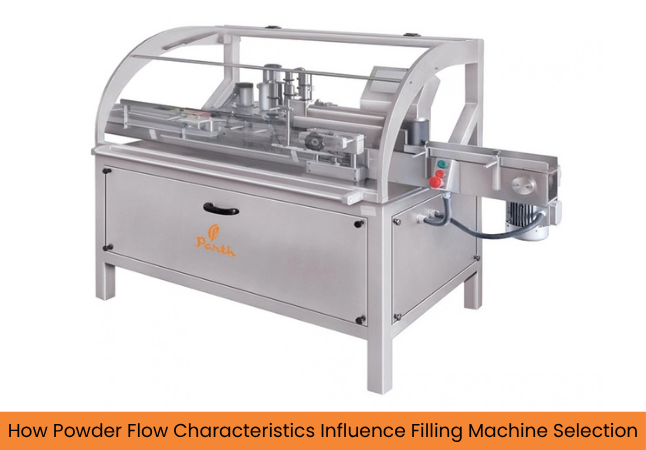
The term dry syrup powder filling machine covers a wide range of underlying dosing technologies, and the right one depends heavily on what you are actually filling. Broadly, pharma powder products fall into a few behavioral categories that matter for equipment selection.
Free flowing granules, common in many dry syrup formulations, move predictably through dosing mechanisms and tend to be the easiest to handle accurately. Cohesive fine powders, which can clump, bridge, or resist consistent flow, require dosing technology that actively manages these tendencies rather than assuming gravity alone will produce a consistent fill. Chemical bulk powders, used in some pharma intermediate and bulk packing applications, often bring their own density variability and, in some cases, sensitivity to static charge or moisture that standard dosing units are not built to handle.
Comparing Powder and Granule Filling Technologies
| Dosing Technology | Best Suited For | How It Works | Key Consideration |
|---|---|---|---|
| Auger filling | Fine to moderately free flowing powders | A rotating auger screw meters powder by volume through a controlled number of rotations | Well established, but less ideal for very cohesive or chunky powders |
| Cup or volumetric filling | Free flowing granules with consistent bulk density | Product fills a calibrated cup or chamber before release into the container | Fast and simple, but sensitive to bulk density changes between batches |
| Vacuum or vibratory assisted filling | Cohesive or bridging fine powders | Vacuum or vibration helps maintain consistent flow into the dosing chamber | Adds complexity but significantly improves accuracy for difficult powders |
| Net weight filling | Products requiring gravimetric accuracy regardless of density variation | Product is dosed by weight rather than volume, using load cell feedback | Highest accuracy for variable density products, generally slower than volumetric methods |
Many manufacturers default to auger filling because it is the most widely known dosing method, without evaluating whether their specific granule or powder would actually be better served by a vibratory assisted or net weight system. This is particularly relevant for chemical bulk powder packing, where density variation between supplier batches can meaningfully affect volumetric fill accuracy even when the auger mechanism itself is working correctly.
Granule Filling: Getting Flow Behavior Right
Granulated dry syrup formulations generally flow more predictably than fine powders, but that does not mean granule filling is automatically simple. Granule size distribution, moisture content, and the presence of fines within an otherwise granulated product can all affect how consistently a dosing chamber fills.
A granule filling machine designed with adjustable dosing chamber geometry and flow assistance, such as gentle vibration to settle product before dosing, tends to produce more consistent fills across the natural batch to batch variation that granulated pharma products experience. This becomes especially important for dry syrup products where dosing accuracy has direct implications for the reconstituted medication dose a patient ultimately receives.
Chemical Powder Packing: A Different Set of Demands
Chemical powder packing for pharma bulk and intermediate products often involves higher fill weights and different container formats than dry syrup consumer packs, along with powders that may be more prone to caking, static buildup, or moisture absorption during the filling process itself. A chemical powder packing line built for this application typically needs more robust dust containment, more deliberate handling of container filling to minimize aeration and settling issues, and dosing accuracy validated specifically against the product's actual bulk density range rather than a single reference measurement.
Parth Engineers & Consultant designs powder filling lines that account for these differences up front, rather than applying a single generic powder filling configuration across both consumer facing dry syrup packs and bulk chemical powder packing needs.
Bottle Compatibility and Filling Line Integration
A dry syrup powder filling machine line does not operate in isolation from the bottles and closures it fills into. Powder fill accuracy needs to account for headspace requirements within the bottle, especially for products that will later have water added by the patient or pharmacist for reconstitution. Getting this wrong, filling too close to the bottle neck or leaving inconsistent headspace across a batch, can create both dosing perception issues and practical reconstitution problems for the end user.
Once filled, dry syrup bottles typically move to capping and sealing, where our bottle filling machine line capping and sealing stations apply consistent torque and, where required, tamper evident sealing. From there, bottles proceed to labeling and cartoning, carrying the same batch traceability established at the filling stage through to the finished, dispatch ready product.

Semi Automatic Versus Fully Automatic Powder Filling Lines
| Consideration | Semi Automatic Powder Filling | Fully Automatic Powder Filling |
|---|---|---|
| Best suited for | Multiple SKUs, variable batch sizes | Stable, high volume single product runs |
| Operator involvement | Manual bottle placement or triggering at some stages | Fully integrated with upstream and downstream stations |
| Changeover flexibility | Generally faster for smaller format or product changes | Requires format parts but improves cost per unit at scale |
| Investment level | Lower initial cost | Higher initial cost, better long term economics |
For manufacturers producing a varied range of dry syrup formulations in smaller batches, a semi automatic line often provides better practical flexibility than a fully automatic system optimized around a single dominant product.

