







Quick Read
- A liquid filling machine line is only as reliable as its weakest station, and bottle capping, sealing, and unscrambling are the three stations most likely to cause downtime if they are underspecified.
- Choosing between gravity, pressure, and volumetric filling depends heavily on your product's viscosity, and getting this wrong causes foaming, dripping, and dosage inconsistency.
- Bottle unscramblers and cap sealing units need to be matched to your exact bottle and cap geometry, not treated as generic add ons to a filler.
- Parth Engineers & Consultant designs complete bottle filling machine lines for oral liquids, syrups, and other pharma liquid products, integrating filling, capping, sealing, and unscrambling into one coordinated line.
When pharma manufacturers think about a liquid filling machine, attention usually goes straight to the filling nozzles and dosing accuracy. That focus is understandable, but it overlooks three stations that quietly determine whether your finished bottles actually pass quality checks: unscrambling, capping, and sealing. A bottle that is filled perfectly but capped loosely, or sealed with an inconsistent torque, still fails at the pharmacy shelf or during transit.
With more than 25 years of experience building packaging machinery for the pharmaceutical industry, Parth Engineers & Consultant has seen firsthand how often these supporting stations get treated as an afterthought during line planning. This guide walks through what each station does, how to evaluate it, and how they come together in a properly integrated bottle filling machine line.
Where the Bottle Filling Machine Line Actually Begins
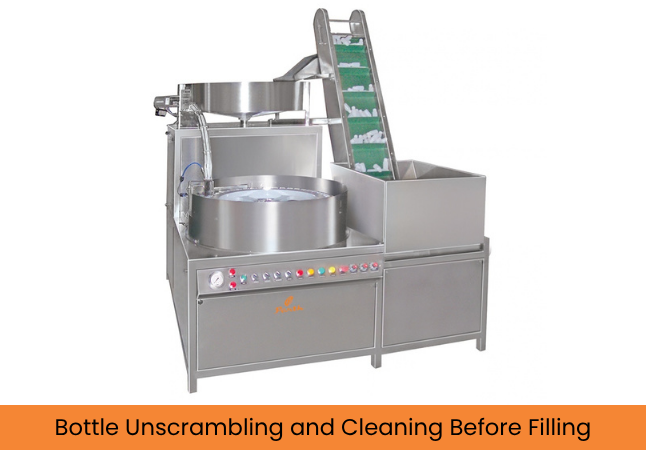
Most conversations about a bottle filling machine start at the filling nozzle, but a well designed line actually starts with bottle unscrambling. A bottle unscrambler takes randomly oriented empty bottles, typically fed from a hopper, and orients them correctly, neck up, for the rest of the line. If this station is inconsistent, every downstream process inherits the problem, from air jet cleaning to filling to capping.
For pharma liquid production, bottles frequently also pass through an air jet cleaning station immediately after unscrambling, using ionized or filtered air to remove dust and fine particulate before the bottle ever reaches the filling nozzle. Skipping or underpowering this step is a common, avoidable cause of particulate contamination complaints.
Matching Filling Technology to Your Liquid Product
Not all liquid filling machine technologies behave the same way with every product, and pharma liquids in particular vary widely in viscosity, foaming tendency, and sensitivity to shear.
| Filling Technology | Best Suited For | Key Advantage | Watch Out For |
|---|---|---|---|
| Gravity filling | Thin, free flowing liquids like oral solutions | Simple, gentle on the product | Slower fill speeds for viscous liquids |
| Pressure or overflow filling | Foaming or low viscosity products | Consistent fill level regardless of bottle shape variance | Not ideal for very viscous syrups |
| Piston filling | Thicker syrups and viscous oral liquids | High dosing accuracy at various viscosities | Requires format parts for different fill volumes |
| Servo driven volumetric filling | Products needing precise, repeatable dosing | Excellent accuracy and easy recipe changeovers | Higher upfront investment than gravity systems |
For oral liquids and syrups specifically, viscosity can vary batch to batch depending on formulation, which is why many of our pharma clients choose piston or servo volumetric filling over simple gravity systems even when their product looks thin on paper. If your facility handles eye drop or ear drop formulations, the same underlying filling principles apply, but at far smaller fill volumes, which requires a dosing unit built for accuracy at low millilitre ranges rather than one simply throttled down from a larger format.

Bottle Capping Machines: More Than Just Twisting a Cap On
A bottle capping machine sounds like the simplest station on the line, yet capping failures are among the most common causes of secondary packaging rejection. There are several distinct capping approaches used across pharma liquid lines.
- Screw capping machines, which thread and tighten caps to a controlled, repeatable torque, are the most common choice for oral liquid and syrup bottles.
- Snap or press fit capping, used for caps that close with downward pressure rather than rotation, suited to certain dropper and dispensing closures.
- Spindle capping heads, which use rotating belts or discs to apply consistent torque across a continuous line without stopping each bottle individually.
The critical variable buyers often miss is torque consistency. A screw capping machine that applies inconsistent torque across a batch will produce some bottles that leak in transit and others that are so tightly sealed customers struggle to open them. When we design a bottle capping machine into a client's line, torque control and repeatability are treated as non negotiable specifications, not optional upgrades.
Bottle Sealing Machines and Tamper Evidence
Separate from capping torque, many pharma liquid products require an additional bottle sealing machine step, particularly where tamper evident sealing or induction sealing is a regulatory or brand protection requirement. Induction sealing uses electromagnetic energy to bond a foil liner to the bottle neck beneath the cap, creating a seal that must be physically broken before first use, which is a strong deterrent against tampering and a clear visual cue for consumers and pharmacists.
Getting bottle sealing right means matching seal head power and dwell time to your exact bottle neck diameter, cap material, and foil liner specification. A sealing station that is not tuned to these variables will produce inconsistent seals that either fail integrity testing or damage the bottle neck.
Comparing Semi Automatic and Fully Automatic Bottle Filling Machine Lines
| Consideration | Semi Automatic Line | Fully Automatic Line |
|---|---|---|
| Ideal batch profile | Multiple SKUs, smaller production runs | High volume, consistent product runs |
| Labor requirement | Moderate operator involvement at each station | Minimal manual intervention, higher throughput |
| Changeover flexibility | Generally quicker for small format changes | Requires format parts but scales efficiently |
| Investment level | Lower initial cost | Higher initial cost, better long run economics |
Many pharma manufacturers we work with start with a semi automatic bottle filling machine line for flexibility across SKUs, then transition specific high volume products onto a fully automatic line as demand stabilizes. Because Parth Engineers & Consultant designs its liquid filling lines with future automation in mind, this transition does not typically require starting from scratch.
Building the Complete Line: Filling, Capping, Sealing and Unscrambling Together
The real value of a properly engineered bottle filling machine line is in how these stations work together rather than as isolated equipment. Bottle unscrambling feeds a consistent, correctly oriented bottle into cleaning and filling. Filling technology matched to your product viscosity ensures dosing accuracy. Capping applies consistent, validated torque. Sealing adds tamper evidence where required. When these stations are engineered by a single team as one line, rather than assembled from mismatched individual machines, changeovers are faster, downtime is lower, and quality is more consistent across shifts.
Parth Engineers & Consultant approaches every bottle filling machine line this way, from initial layout through installation and commissioning, so that pharma manufacturers get a coordinated system rather than a row of unrelated machines.

Cross Referencing With the Rest of Your Packaging Line
A liquid filling machine line rarely stands alone in a pharma facility. Bottles moving off this line typically proceed to labeling, where our sticker labeling machines apply batch coding and regulatory information, and then to cartoning, where our automatic cartoning machines handle secondary packaging into cartons ready for dispatch. For manufacturers who also produce injectable products, our vial filling machine and ampoule filling and sealing machine lines apply many of the same filling accuracy principles discussed here, adapted for aseptic vial and ampoule formats. Standardizing your filling, capping, sealing, labeling, and cartoning equipment with one machinery partner tends to simplify spare parts planning and operator training considerably.

