







AI Summary:
An automatic ampoule washing machine's price depends on output capacity, automation level, build material and integration with downstream equipment. Pharma manufacturers should evaluate the full ampoule production line - washing, filling, sealing and labelling - rather than judging cost on the washer alone. Higher-speed, GMP-compliant machines cost more upfront but reduce long-term contamination risk and rework. Choosing an experienced ampoule machine manufacturer ensures better after-sales support and resale value.
Pharmaceutical companies that manufacture injectable products know that quality starts long before the filling needle ever touches a vial. It starts with how clean the container is. An ampoule washing machine is the first and most critical checkpoint in this journey, removing glass particles, dust and microbial contamination before the ampoule moves further down the line. But when manufacturers begin shopping for one, the first question that comes up is almost always: what determines the price?
The honest answer is that there's no single number. Ampoule washer pricing depends on a combination of engineering choices, compliance requirements and how the machine fits into your broader ampoule production line. This article breaks down exactly what drives the cost, so you can budget intelligently instead of comparing quotes blindly.
Ampoule Washing Machine Basics: Why This Equipment Matters in Pharma Packaging
Before diving into pricing, it helps to understand what the machine actually does. Modern ampoule washing systems use a combination of external and internal jet sprays, often with water and compressed air in alternating cycles, to dislodge particles from the ampoule surface and interior. Rotary designs move ampoules continuously through multiple washing stations, while basket or batch-type machines handle smaller volumes.
This isn't a cosmetic step - it directly affects whether your finished injectable batch passes particulate matter testing. A poorly washed ampoule can compromise an entire production run, which is why manufacturers are often willing to pay more for a washer with proven, validated performance rather than the cheapest option on the market.

Ampoule Filling Process and How It Connects to Washing Quality
The ampoule filling process is only as good as the container that enters it. If washing is inconsistent, filling lines see more rejections, more downtime for cleaning nozzles and higher risk of contamination complaints later in the supply chain. This is why many buyers don't evaluate the washer in isolation - they look at how well it complements the ampoule filling machine that follows it.
Some manufacturers integrate washing, drying and filling into a single continuous unit. This raises the upfront price but reduces manual handling, floor space and the number of operators needed - often paying for itself within a couple of production cycles.
Ampoule Machine Pricing: Key Factors That Drive the Cost Up or Down
Several variables determine where an ampoule machine lands on the price spectrum:
- Output capacity (speed): Machines rated for higher ampoules-per-hour throughput require more precise engineering, additional washing stations and stronger motors - all of which add to the cost.
- Level of automation: Fully automatic machines with PLC-based controls, touchscreen HMI and automatic ampoule loading/unloading cost more than semi-automatic models that need manual feeding.
- Construction material: SS316 contact parts and GMP-compliant cladding cost more than standard stainless steel but are often necessary for regulatory approval in regulated markets.
- Number of washing stations and nozzles: More stations mean more thorough cleaning cycles but also a larger machine footprint and higher tooling cost.
- Validation and documentation support: IQ/OQ/DQ documentation, FAT/SAT support and compliance with cGMP or US FDA/EU guidelines add to the package price but are essential for regulated exports.
- Changeover flexibility: Machines designed to handle multiple ampoule sizes (1ml to 10ml, for example) with quick-change tooling typically cost more than fixed-size machines.
Buyers should request a clear breakdown of these specifications when comparing quotations, since two machines quoted at similar prices can have very different long-term value.
Ampoule Production Line Integration: How Bundling Equipment Affects Budget
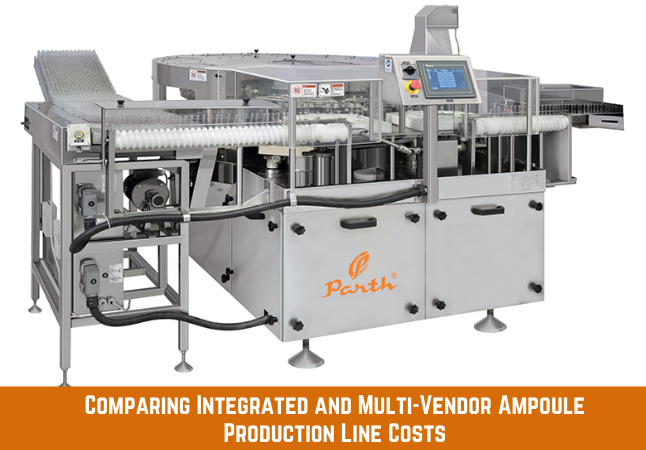
Very few manufacturers buy a washing machine as a standalone purchase. Most are planning or already operating, a full ampoule production line - washing, filling, sealing, leak testing and labelling working together. When you buy these as an integrated line from a single supplier, costs are often more predictable because the equipment is designed to match speeds and footprints from the start.
Buying machines piecemeal from different vendors might look cheaper individually, but mismatched output speeds, incompatible conveyor heights and inconsistent automation standards usually lead to bottlenecks and additional engineering costs later. A well-planned line investment, even at a higher initial price, tends to be more cost-efficient over the equipment's lifetime.
Our Other Product
Tube Filling MachineAmpoule Filling and Sealing Machine Compatibility: A Cost Consideration
An ampoule filling and sealing machine working downstream of your washer needs to match its throughput almost exactly or one of the two machines will sit idle for part of every cycle. This compatibility requirement is a real cost factor: suppliers who offer matched washing-and-filling combinations can price the line more competitively than if you're trying to retrofit a washer to an existing filling setup from a different brand.
Sealing method also plays a role. Gas-flame sealing systems for tip or pull sealing add to the cost compared to simpler designs, but they're often necessary depending on the ampoule type and the product being filled.

Ampoule Labelling Machine and Ampoule Packing Machine: Downstream Costs to Plan For
Once ampoules are washed, filled and sealed, they still need to be labelled and packed before they reach a pharmacy shelf. An ampoule labelling machine applies sticker labels at speed, often synchronized with the same conveyor system used earlier in the line. Buyers frequently underestimate this cost because they focus heavily on the washing and filling stages.
Similarly, an ampoule packing machine for cartoning or tray-loading adds another line item to the budget. While these machines are sometimes purchased later in a phased rollout, planning for them early - even if you don't buy them immediately - helps you choose a washing and filling setup with compatible interfaces, saving on retrofitting costs down the line.
Ampoule Washing Investment: Tips to Get the Best Value for Your Money
A few practical steps can help manufacturers avoid overspending or underspending on this equipment:
- Define your actual production volume needs rather than buying for theoretical maximum capacity.
- Ask for energy consumption figures - water and compressed air usage affect operating cost over time.
- Check spare parts availability and lead times before finalizing a vendor.
- Request site references or video demonstrations of the machine running at your required speed.
- Confirm whether the price includes installation, training and post-sale technical support.
Parth Engineers & Consultant: A Dependable Partner for Ampoule Machinery Needs
For manufacturers evaluating washing, filling, sealing, labelling or packing equipment, working with an experienced manufacturer makes a measurable difference in both cost predictability and long-term reliability. Parth Engineers & Consultant , based in Ahmedabad, India, exports a complete range of pharmaceutical packaging machinery, including Automatic Rotary Ampoule Washing Machines, Automatic Ampoule Filling & Sealing Machines and Automatic Ampoule Sticker Labelling Machines, alongside vial filling, liquid filling, tube filling and cartoning equipment.
Because these machines are engineered to work together as a cohesive ampoule production line, manufacturers get matched throughput, consistent build quality and simplified after-sales support from a single point of contact. This approach reduces the hidden costs that often come from mixing equipment across multiple vendors and gives buyers a clearer, more transparent picture of total investment from day one.

