

For Export Enquiry


Call Us
Preventing Powder Bridging and Inconsistent Fills in Dry Syrup Packaging: Practical Machine-Level Solutions
Share At:





Listen to the Audio Version
Dry Syrup Packaging: Practical Machine-Level Solutions
This article explores the practical and machine-level strategies to prevent powder bridging and inconsistent fills during dry syrup packaging. It discusses key operational principles, identifies potential challenges and proposes effective technical solutions using advanced dry syrup packaging machinery.
Understanding the Challenges in Dry Powder Syrup Packaging
In dry syrup packaging, two of the most pressing operational concerns are powder bridging and inconsistent fills. These issues not only disrupt the production flow but also compromise the quality, efficiency and regulatory compliance of the final product. Powder bridging occurs when the dry powder forms a stable arch over the outlet of the hopper, preventing smooth discharge. Inconsistent fills, on the other hand, lead to variable dosage volumes, affecting the therapeutic efficacy and marketability of the product.
These problems usually arise due to the physical properties of the powder - like poor flowability, hygroscopic nature or electrostatic charge - as well as machine design and operational inefficiencies. Without addressing these root causes, manufacturers risk product recalls, wastage and loss of customer trust.

Dry Syrup Filling Machine Design for Flow Optimization
The foundation of reliable dry syrup packaging lies in the design of the dry syrup filling machine. Machines equipped with vacuum-assisted filling and consistent powder feed mechanisms play a key role in maintaining fill volume accuracy. Agitators within the hopper ensure powder movement, minimizing the risk of bridging. Additionally, the use of variable-speed drives enables operators to fine-tune machine speed according to the powder's behavior, significantly improving overall performance.
Critical features such as adjustable powder wheel cavity depth and funnel-mounted plunger systems ensure smooth delivery into containers, reducing the chance of spillage or underfill. These systems create a tightly controlled filling environment, making them suitable for powders with challenging flow characteristics.
Read Our Article
The Advantages Of A Powder/Dry Syrup Filling MachineDry Syrup Powder Filling Machine Features That Prevent Bridging
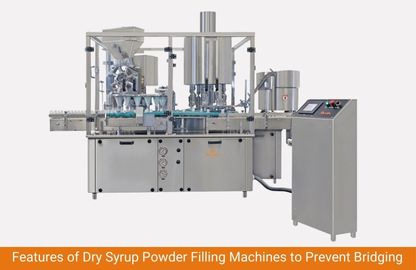
A well-engineered dry syrup powder filling machine focuses on flow control and stability. Using a powder wheel with multiple adjustable cavities and synchronized plunger mechanisms, the system ensures consistent powder collection and discharge. The powder wheel’s head is strategically aligned with the funnel plate to avoid powder misdirection.
Another smart addition is the No Bottle – No Fill system. This sensor-based control halts powder discharge in the absence of a container, which not only prevents wastage but also avoids powder buildup at the outlet - one of the precursors to bridging.
The addition of anti-static devices and a sealed acrylic cabinet helps reduce dust formation and powder clumping. This sealed setup also keeps the environment contamination-free, especially important in pharmaceutical manufacturing.
Dry Syrup Filling and Sealing Machine: Enhancing Reliability
When it comes to minimizing fill inconsistencies, the dry syrup filling and sealing machine excels by combining volumetric filling precision with immediate sealing. This is particularly effective in preventing contamination and maintaining the integrity of the product post-fill. By sealing immediately after filling, the chances of moisture ingress - one of the culprits for powder clumping - are significantly reduced.
The coordinated action between the filling turret and sealing unit ensures bottles are sealed at optimal timing. Machines equipped with ROPP or screw capping systems using pick-and-place mechanisms provide secure closure, especially for powders that may absorb moisture from the surrounding air.
Our Other Product
Liquid Filling Machine LineDry Syrup Filling Line Integration and Synchronization
A fully integrated dry syrup filling line brings together filling, capping, labeling and inspection systems. Synchronization between these components ensures that the product flows seamlessly through every stage without pause or backflow. Smooth line automation significantly reduces the occurrence of bridging and overflows due to backup or jerky motions.
Each module within the line, from the powder feeding hopper to the cap chute sensor, plays a part in optimizing performance. Advanced models also allow for real-time monitoring and remote troubleshooting, making preventive maintenance easier and more effective.
Dry Syrup Filling and Capping Efficiency with Sensor Technology
Modern dry syrup filling and capping systems are built with sensor-driven automation. These sensors help in detecting issues like “No Cap in Chute” or “No Bottle on Conveyor.” Such systems prevent the machine from performing unnecessary actions, thus saving powder and protecting machine components from damage.
In scenarios where bridging is likely, sensors can trigger automatic agitators or signal operators for hopper refilling. Preventive sensor-based alerts allow manufacturers to act before the issue escalates into a major production delay.

Rotary Dry Syrup Filling Machine Line for Continuous Production
A rotary dry syrup filling machine line is particularly suitable for high-output pharmaceutical setups. These rotary systems allow continuous motion, reducing downtime between fills and maximizing throughput. The consistent movement also aids in keeping the powder moving inside the hopper, which is essential for preventing bridging in longer production cycles.
With modular components and easy changeover features, rotary machines support multiple fill volumes without extensive recalibration. Their robust design and integrated vacuum system help in maintaining a contamination-free and spill-proof environment, supporting uninterrupted production.
Dry Syrup Filling & Capping Machine Operation Explained
The operation of a dry syrup filling & capping machine is a perfect blend of mechanics and automation. Powder is drawn into a vacuum chamber, held temporarily and released only when the sensor detects a bottle in place. This mechanism ensures precision and zero wastage.
The unique design of the plunger system lifts the empty bottle into the funnel, preventing spillage. The coordinated rotation of the star wheel, feed worm and funnel cup ensures that every bottle gets the exact amount of powder it needs before moving to the capping station.
These machines also offer adjustable speed settings, allowing users to modify operations based on powder type, container size or production targets - all essential for maintaining consistency in every fill.
Dry Powder Syrup Packaging: Process Control and Cleanroom Integration
Effective Dry Powder Syrup Packaging requires integration with cleanroom standards and process controls. The use of acrylic enclosures and dust collection units ensures that airborne particles do not compromise product integrity. Additionally, clean-in-place (CIP) systems can be integrated into the hopper and powder wheel, minimizing manual intervention and reducing the risk of contamination.
Seamless compatibility with HEPA filters and controlled temperature/humidity conditions further ensures that powders remain free-flowing throughout the process. Process validation and real-time data tracking are critical for maintaining regulatory compliance.
Highlighting Innovation by Parth Engineers & Consultant
One of the trusted names in this industry, Parth Engineers & Consultant, has been at the forefront of innovation in packaging machinery. With decades of experience and a focus on cutting-edge engineering, the company provides comprehensive solutions for pharmaceutical dry syrup packaging. Their machinery lineup includes Bottle Labeling Machines, Injectable Dry Powder Filling Machines and Monobloc systems that integrate filling and capping functionalities.
Based in Ahmedabad, Parth Engineers & Consultant caters to both domestic and international markets. Their machines are built with GMP compliance in mind and are trusted for their accuracy, efficiency and durability. Clients benefit from their vast industry expertise and commitment to continual improvement in machine-level automation.
Minimizing Powder Wastage Through Machine Optimization
Reducing powder wastage is an essential element of cost control and operational efficiency. By using machines with variable fill volume settings and precision-controlled discharge systems, manufacturers can significantly cut down on overfills or missed fills. Smart hoppers with level sensors ensure timely refilling, while anti-bridging agitators keep the powder in motion.
Incorporating real-time monitoring dashboards also allows operators to detect any anomalies in the fill weight trends. These small but impactful upgrades ensure long-term savings and consistent product output.
Read Our Article
All About Complete Dry Syrup Filling LineAutomating Quality Control in Dry Syrup Packaging
The future of dry syrup packaging lies in automated quality control. Advanced machines now come with in-line weight checking systems, fill verification and torque testing for caps. Such systems make sure that each unit meets pharmaceutical standards without manual checks, thereby increasing line efficiency and reducing human error.
Camera systems also detect bottle defects, misaligned caps or powder spillage instantly, allowing corrective actions without halting production. The integration of these QC systems not only improves output but also builds trust with regulatory bodies and consumers.
Conclusion
Preventing powder bridging and inconsistent fills in dry syrup packaging requires a combination of smart machine design, sensor-driven automation and continuous process optimization. From precise volumetric filling to immediate sealing and intelligent conveyor synchronization, each aspect contributes to operational excellence. Manufacturers investing in modern machinery like dry syrup filling and capping machines not only enhance product quality but also streamline their production efficiency.
Parth Engineers & Consultant stands out as a reliable partner in this journey, offering high-performance machines that align with GMP and international standards. With automation, innovation and industry expertise, preventing bridging and inconsistent fills becomes not just a possibility - but a standard practice.
FAQs About Dry Syrup Packaging
Bridging happens when powder arches over the hopper outlet due to poor flow properties or machine design.
It uses vacuum systems, plunger alignment and sensor-based operations to ensure accurate and consistent filling.
Rotary lines offer continuous motion, reduced downtime and high efficiency in large-scale packaging setups.
It prevents moisture ingress and powder contamination, ensuring product stability and shelf life.
Automation ensures precision, reduces human error and maintains consistent fill volumes and secure caps across all units.
About Author
We provide 24 x 7 Customer
Service & Support


Copyright © 2026, Parth Engineering & Consultant ( India ).
Web Design by Opal Infotech