







AI Summary
Modern manufacturing facilities worldwide are adopting the liquid filling machine as a cornerstone of high-throughput production. From food and beverage to pharmaceuticals, automatic liquid filling machine solutions eliminate human error, accelerate output and maintain regulatory compliance. Volumetric liquid filling machine and servo liquid filling machine technologies offer unmatched dosing precision, while pharma liquid filling machine and liquid vial filling machine systems meet stringent sterility standards. The integration of an automatic liquid filling line streamlines entire packaging workflows, reducing labor dependency and operational cost. As global demand for packaged liquids grows, investing in an automatic liquid bottle filling machine is no longer optional - it is a strategic necessity for competitive manufacturers.
Liquid Filling Machine: The Foundation of Modern Packaging
A liquid filling machine is purpose-built equipment that dispenses precise volumes of liquid into containers - bottles, vials, pouches or tubes - at controlled speeds. Available in semi-automatic and fully automatic variants, these machines serve industries including food and beverage, cosmetics, agrochemicals and healthcare. Unlike manual filling, which is prone to spillage, inconsistency and contamination, a machine-driven process delivers repeatable accuracy across thousands of cycles per shift. Whether handling thin, water-like fluids or viscous products such as gels and syrups, modern filling equipment adapts through adjustable nozzle configurations, speed controls and fill-volume settings.
Manufacturers globally - from India's pharmaceutical hubs in Ahmedabad and Hyderabad to industrial clusters in Germany, the USA and China - rely on these machines to meet stringent packaging standards, reduce product giveaway and scale production without proportionally increasing headcount.
Read Our Article
Key Considerations When Choosing a Liquid Vial Filling MachineAutomatic Liquid Filling Machine: Precision Meets Scalability
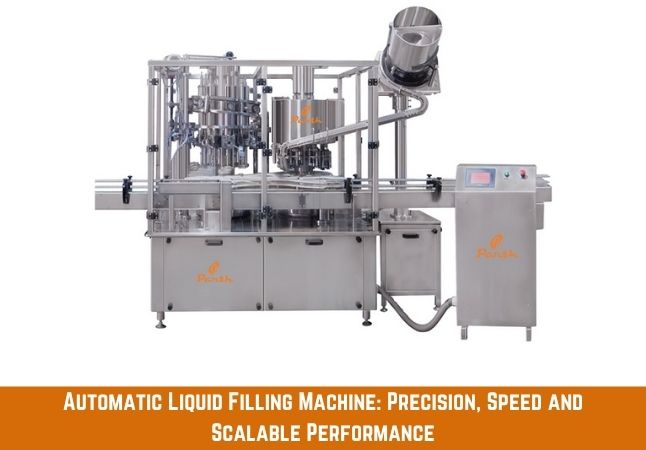
The automatic liquid filling machine removes operator dependency from the filling cycle. Equipped with programmable logic controllers (PLCs), touchscreen HMIs and sensor arrays, these systems auto-detect container presence, initiate the fill cycle and halt on completion - all without manual intervention. This automation translates directly into higher output rates, typically ranging from 1,000 to 18,000 bottles per hour depending on container size and fluid viscosity.
Key advantages of automatic systems include consistent net content compliance, reduced product loss from drips and overflows, improved hygiene (critical for food and pharma) and data logging for quality audits. Automatic machines also support quick changeovers, allowing manufacturers to switch between product SKUs with minimal downtime - a critical capability in contract filling operations serving multiple clients.
Volumetric Liquid Filling Machine: Accuracy Engineered for Compliance
A volumetric liquid filling machine measures a defined volume of liquid per fill cycle, using mechanisms such as piston pumps, peristaltic pumps, flow meters or timed gravity fills. This approach guarantees fill accuracy within ±0.5% or better, making it the preferred choice for products where net content declarations are legally mandated - such as juices, edible oils, pharmaceuticals and household chemicals.
Volumetric technology is especially efficient for free-flowing liquids. Piston-type volumetric fillers handle thick creams and pastes with equal reliability, making them versatile across product lines. As regulatory agencies across the EU, USA and India tighten net quantity tolerances, volumetric systems offer manufacturers a built-in compliance advantage without added quality control overhead.

Servo Liquid Filling Machine: Next-Generation Dosing Control
The servo liquid filling machine replaces pneumatic or mechanical actuation with servo motor-driven pistons or pumps, enabling real-time fill volume adjustments via software - no physical cam or valve changes required. This digital precision allows operators to modify fill volumes, speeds and dwell times from the HMI panel in seconds, drastically reducing changeover time between product batches.
Servo-driven systems excel in high-value liquid applications where product cost demands zero overfill tolerance. Cosmetic serums, specialty food extracts, pharmaceutical syrups and premium chemical formulations all benefit from servo accuracy. The technology also supports multi-head configurations, where each head operates independently, maintaining consistent output even if one head is undergoing maintenance - minimizing line stoppages.
Our Other Product
Automatic Servo Base Volumetric Liquid Filling MachinePharma Liquid Filling Machine: Meeting GMP and Sterility Standards
A pharma liquid filling machine is engineered to comply with Good Manufacturing Practice (GMP) guidelines set by agencies such as the US FDA, EMA and India's CDSCO. These machines are constructed from 316L stainless steel with electro-polished contact surfaces, minimizing bacterial adhesion and simplifying CIP (Clean-in-Place) and SIP (Steam-in-Place) procedures. All fluid pathways are designed without dead legs to prevent liquid pooling and microbial growth.
Pharmaceutical filling systems incorporate advanced features including HEPA-filtered laminar airflow enclosures, nitrogen blanketing for oxidation-sensitive products and integrated checkweighers for 100% fill verification. Serialization and track-and-trace compatibility ensure compliance with global anti-counterfeiting mandates, which are increasingly mandatory in regulated markets across North America, Europe and Asia-Pacific.
Liquid Vial Filling Machine: Sterile Precision for Injectable Products
The liquid vial filling machine addresses one of the most demanding filling applications - sterile injectables. Used extensively for vaccines, antibiotics, biologics and ophthalmic solutions, these machines operate within ISO-classified cleanrooms and are designed for 100% container integrity. Time-pressure or peristaltic filling mechanisms are preferred for injectable products to eliminate particulate contamination risks associated with traditional piston systems.
Modern vial filling lines incorporate automated stoppering and capping stations downstream, with vision inspection systems checking for particulates, fill levels and stopper placement. Given the zero-defect tolerance of injectable products, these machines feature 21 CFR Part 11 compliant audit trails and electronic batch records - essential for regulatory submissions and international market access.
Automatic Liquid Filling Line: Integrating End-to-End Packaging
An automatic liquid filling line connects multiple packaging stations into a synchronized workflow - from container depalletizing and conveying through filling, capping, labeling, coding and case packing. This integration eliminates inter-station bottlenecks, reduces manual handling touchpoints and enables consistent throughput without pace mismatch between upstream and downstream equipment.
Manufacturers implementing fully integrated lines report 30–50% gains in overall equipment effectiveness (OEE) compared to standalone machine setups. Centralized SCADA or MES integration enables real-time production monitoring, predictive maintenance alerts and automated downtime reporting - providing operations managers the visibility needed to optimize shift performance and meet production targets consistently.
Automatic Liquid Bottle Filling Machine: Versatility Across Container Formats
The automatic liquid bottle filling machine is the workhorse of consumer goods packaging, handling formats from 50ml pharmaceutical syrups to 5-liter household cleaning products. These machines accommodate round, rectangular and custom-shaped bottles in glass or PET, with quick-release tooling for format changeovers. Features such as neck-holding conveying systems, drip-free nozzles and overflow filling mechanisms ensure clean operation across diverse product and container combinations.
Industries leveraging automatic bottle filling machines include personal care, nutraceuticals, agrochemicals, edible oils and beverages. In emerging markets like India, Southeast Asia and Latin America, where FMCG production is scaling rapidly, automatic bottle filling machines represent a cost-effective path to international quality standards without the capital burden of fully bespoke systems.
Conclusion
Selecting the right liquid filling machine - whether a volumetric system for dosing accuracy, a servo platform for digital flexibility, a pharma-grade line for GMP compliance or an integrated automatic liquid filling line for end-to-end efficiency - directly determines a manufacturer's production capability, regulatory standing and market competitiveness. As global packaging standards tighten and consumer demand for consistent product quality intensifies, investing in advanced automatic liquid filling machine solutions is a forward-looking operational decision. Businesses that adopt these technologies today gain measurable advantages in speed, accuracy and scalability that translate into sustained market growth and customer trust.


