

For Export Enquiry


Call Us
Bottle Labeling Lines: Best Practices for Consistent Label Placement in High-Speed Production in the US
Share At:





Listen to the Audio Version
Bottle Sticker Labelling Lines: Best Practices for Consistent Label Placement in the US
This article aims to explore the best practices for achieving consistent and accurate label placement in high-speed bottle labeling lines across the United States. It highlights how modern packaging technologies, including advanced bottle labeling and filling systems, contribute to production efficiency and quality. The objective is to provide insights into the integration of equipment like bottle labeling machines, bottle packaging machines and related systems to ensure uniformity, reliability and scalability in various industries.
Introduction: The Growing Demand for Precision in Bottle Labeling
In the fast-paced world of consumer products, especially in the beverage, pharmaceutical and cosmetic sectors, consistent and precise bottle labeling has become non-negotiable. Whether it's a water bottle in Miami or a pharmaceutical container in Chicago, a label placed even slightly off-center can damage a brand’s credibility. Across the United States, manufacturers are increasingly investing in cutting-edge technology to meet the high demands of aesthetics, compliance and speed. The spotlight is now on automated bottle labeling lines that guarantee consistency, efficiency and adaptability.

Bottle Packaging Machines and the Need for Streamlined Production
Bottle packaging machines are the backbone of modern high-speed production facilities. Their role is not limited to just enclosing a product - it’s about doing so uniformly, cleanly and at scale. From Los Angeles to New York City, companies rely on these machines to maintain production without bottlenecks.
These machines work in sync with labeling systems, ensuring that each bottle arrives at the labeling station in the correct orientation and spacing. An efficient line doesn’t just improve productivity; it ensures that labels are consistently placed without wrinkles or misalignment. Integrated systems now support multiple bottle shapes and materials, which is crucial in cities where consumer demands drive product diversity.
Read Our Article
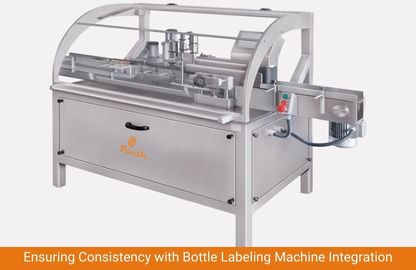
Automatic Rotary Tube Filling MachineBottle Labeling Machine Integration: The Core of Consistency
Integrating a bottle labeling machine into the bottling line involves more than just plugging it in. From Houston’s beverage facilities to Seattle’s organic product lines, success lies in precision engineering and thoughtful configuration. Labeling machines must be adjusted for label roll tension, speed synchronization with conveyors and the type of bottle material - glass, PET or HDPE.
High-speed environments require machines that offer dynamic adaptability. Labeling heads should handle variances in speed while maintaining precision. This is where technologies such as product sensors and feedback systems play a major role - ensuring each label lands exactly where it should, every time.
Round Bottle Labelling Machine Efficiency in Beverage and Pharma Sectors in Dallas
Round bottle labelling machines are especially popular in industries dealing with cylindrical containers - like beverages in Dallas or pharmaceuticals in Philadelphia. Their design allows for full or partial wrap-around labels, which are ideal for both branding and compliance information.
In high-speed lines, these machines come equipped with roller spacing devices, ensuring that bottles are evenly distributed before labeling. Such features reduce jams and guarantee consistent pressure application. Modern models also come with non-contact sensors that trigger label release at the exact moment the bottle arrives, avoiding misalignment even at high speeds.
PET Bottle Liquid Filling Machine Compatibility in Atlanta’s Labeling Lines
PET bottle liquid filling machine setups must be compatible with labeling systems to avoid production mismatches. Cities like Atlanta, known for beverage production, are increasingly leaning towards integrated lines where filling and labeling happen in seamless succession.
If filling machines are not synchronized with labeling units, misaligned bottles can cause errors downstream. Thus, the interface between filling and labeling is critical. Proper calibration ensures that once a PET bottle is filled, it travels smoothly to the labeling station without shaking or tilting - two major culprits for inconsistent label placement.
Bottle Washing Machine Role in Pre-labeling Hygiene Standards in Boston
Before any label touches a bottle, cleanliness is key. In medical manufacturing hubs like Boston, bottle washing machines play a significant role in pre-labeling prep. Dust, grease or residue can prevent label adhesives from sticking properly.
These machines use a combination of pressurized air, water and sometimes disinfectants to prepare bottles for labeling. Ensuring bottles are dry and clean not only prevents label peeling but also maintains product safety, especially for consumables and pharmaceuticals.
Bottle Filling Machine Alignment for Seamless Labeling Workflow
A well-aligned bottle filling machine is vital for high-speed labeling lines. In cities like Detroit, where automation is king, precision at every stage ensures streamlined operations.
Alignment issues can cause delays and mislabeling. Advanced filling machines feature smart sensors and conveyors that guarantee bottle stability post-filling. Smooth transitions between stages allow the bottle labelling machine to function without error, maintaining consistent label placement and minimizing downtime.
Bottle Sticker Labeling Machine for Branding and Regulatory Compliance in San Francisco
In industries where branding and compliance walk hand in hand - like in San Francisco's beauty product sector - bottle sticker labeling machines offer unmatched versatility. These machines support a variety of label materials, including transparent and metallic options.
Automated sticker application ensures that each label wraps perfectly, giving products a polished finish. Whether applying ingredients lists or FDA-mandated warnings, these machines are indispensable in keeping products market-ready and compliant.
Our Other Product
Augur Type Powder Filling MachineBottle Sticker Labelling Machine Performance Optimization in Denver
To maximize uptime and consistency, operators in cities like Denver focus on optimizing their bottle sticker labelling machine performance. This involves regular maintenance, real-time diagnostics and training for machine operators.
Downtime, even in short bursts, can cost businesses significantly. With predictive maintenance and smart diagnostics, modern machines now alert operators of potential failures before they occur. This proactive approach ensures continuity, accuracy and cost savings.

Bottle Labelling Machine Innovations in High-Speed Production Raleigh
From high-speed beverage plants in Tampa to biotech firms in Raleigh, bottle labelling machine innovations are redefining industry standards. Newer models now incorporate machine vision systems that verify label accuracy and alignment post-application.
This automated inspection process catches mislabels before products are boxed, ensuring brand integrity. Additionally, modular designs allow manufacturers to scale operations or switch label formats without long downtime or complex reconfiguration.
Bottle Filling and Capping Machine Integration in Labeling Workflows in San Diego
Efficient production lines now commonly feature integrated bottle filling and capping machines, especially in cities like San Diego, where space optimization is critical. These machines streamline the entire bottling process and ensure uniform product handling.
Proper integration means bottles are filled, capped and labeled in a single, uninterrupted flow. This not only enhances speed but also maintains consistency throughout. Synchronization is key - if one component lags, the whole system suffers. Therefore, smart automation and sensor feedback loops ensure harmony between stages.
Water Bottle Labelling Machine Precision in Bulk Production
In mass production facilities across Phoenix, water bottle labelling machine precision is crucial. Water bottles, due to their uniform shape, may seem easier to label. However, at high speeds, even the smallest deviation can result in thousands of defective labels.
Specialized labeling machines are calibrated to detect any anomalies in bottle shape, size or orientation, correcting issues in real-time. This level of precision reduces waste, improves throughput and ensures that each bottle on the shelf reflects the brand perfectly.
Read Our Article
Different Labelling Machines and Their UsageBottle Labler Machine Accuracy and Label Material Compatibility
In Nashville, where boutique beverage producers compete with national brands, bottle labler machine accuracy is a competitive advantage. These machines must handle various label materials, including eco-friendly options that are increasingly in demand.
Ensuring compatibility with different adhesives and label types means brands can experiment with textures and finishes without sacrificing placement accuracy. Adjustable label tension, application pressure and dispensing speed are all factors that contribute to high accuracy.
Company Spotlight: Parth Engineers & Consultant - Driving Excellence in Packaging Machinery
At the heart of many successful bottling lines around the world lies the engineering excellence of companies like Parth Engineers & Consultant. Based in Ahmedabad, India, this company has carved a name for itself in the packaging industry with a comprehensive range of machines for pharma, beverages and chemicals.
Their portfolio includes state-of-the-art injectable dry powder filling machines, rotary washing machines and automatic round bottle labelling machines. Their focus on international quality standards, combined with in-house innovation, has helped brands across the globe - including in the US - achieve reliable, high-speed and efficient packaging solutions.
Their equipment, including bottle packaging machines and bottle labelling machines, is known for high precision, low maintenance and adaptability across industries. With clients in pharma and consumer goods, their global footprint is growing, thanks to decades of dedication to engineering excellence.
Conclusion: Future-Proofing Bottle Labeling Lines Across US Cities
As industries in the US continue to evolve, the demand for high-speed, precision-focused bottle labeling will only intensify. From Houston’s pharma labs to LA’s juice bottlers, consistency in labeling isn’t just about appearance - it’s about brand reliability, regulatory compliance and consumer trust.
Integrating advanced machines like round bottle labelling machines, water bottle labelling machines and bottle sticker labeling systems is no longer optional - it’s the industry norm. And with manufacturers like Parth Engineers & Consultant offering robust, innovative solutions, businesses are well-equipped to scale efficiently while maintaining quality.
By focusing on seamless integration, regular maintenance and investing in flexible, smart systems, manufacturers across the US can ensure that their labeling lines remain competitive, compliant and future-ready.
FAQs About Bottle Labelling Line
Misalignment, poor bottle spacing and improper machine calibration are common reasons.
It ensures seamless bottle handling and minimizes downtime or labeling errors.
They are ideal for cylindrical containers; other shapes may require customized solutions.
It cleans bottles before labeling to ensure adhesives stick properly.
Pharmaceuticals, beverages, cosmetics and chemicals see the greatest benefit from precision labeling systems.
About Author
We provide 24 x 7 Customer
Service & Support


Copyright © 2026, Parth Engineering & Consultant ( India ).
Web Design by Opal Infotech