







AI Summary:
An Auger Filling Machine is a precision investment that rewards regular upkeep with years of accurate, low-downtime performance. Routine cleaning, lubrication, calibration and wear-part checks prevent powder build-up, dosing errors and unplanned breakdowns. Whether you run a Semi Automatic Auger Type Powder Filling Machine or a high-speed Automatic Auger Filling Machine, a structured maintenance routine protects both product quality and your bottom line. This guide walks through practical, easy-to-follow steps any plant team can implement.
Powder-based pharmaceutical, food and chemical manufacturers rely heavily on the Auger Filling Machine to deliver consistent, accurate dosing batch after batch. Like any precision packaging equipment, it performs best when it's looked after properly. Skipping maintenance doesn't just shorten the machine's lifespan - it also leads to inconsistent fill weights, powder contamination and costly production stoppages. This article walks through the routine maintenance practices that keep an Auger Powder Filling Machine running smoothly for years, along with guidance on choosing the right partner for installation, parts and after-sales support.
Auger Filling Machine – Why Routine Maintenance Matters
An Auger Filling Machine works by rotating a screw (the auger) inside a tube to meter and dispense a precise volume of powder into containers. Because the mechanism involves fine tolerances between the auger and the filling tube, even small amounts of residue, wear or misalignment can throw off accuracy. Over time, neglected machines tend to show three common problems: inconsistent fill weights, powder leakage around seals and increased motor or gearbox strain. A well-planned maintenance schedule catches these issues early, before they turn into expensive repairs or production downtime. Manufacturers who treat maintenance as a daily habit rather than an occasional task consistently get more productive years out of their equipment.

Auger Powder Filling Machine – Daily Cleaning Practices to Prevent Powder Build-up
Powder residue is the single biggest enemy of consistent dosing in any Auger Powder Filling Machine. Fine powders can cling to the auger flutes, hopper walls and filling nozzle, gradually narrowing tolerances and altering fill accuracy. At the end of every shift, operators should remove the auger, wipe down the hopper and filling tube and clear any compacted powder from the discharge area. For machines handling moisture-sensitive or hygroscopic powders, it's worth using dry compressed air or a soft brush rather than water, which can cause clumping or corrosion. A five-minute daily cleaning routine prevents the build-up that otherwise requires a much longer, more disruptive deep-clean later.
Read Our Article
Key Considerations When Choosing a Liquid Vial Filling MachineAuger Powder Filler Machine – Inspecting and Lubricating Moving Parts
Every Auger Powder Filler Machine depends on smooth-running bearings, gears, couplings and drive belts to maintain consistent rotation speed. Friction and heat from continuous operation gradually wear down lubricants, so a weekly inspection of all moving parts is essential. Look for unusual noise, vibration or resistance in the auger rotation and check that lubrication points specified in the machine's manual are topped up with the manufacturer-recommended grade. Avoid over-lubricating, as excess grease can attract powder dust and create a paste that clogs moving assemblies. A properly lubricated machine not only lasts longer but also draws less power and runs quieter.
Auger Powder Filler – Calibration and Accuracy Checks
Even a perfectly clean and lubricated Auger Powder Filler can drift out of calibration due to normal wear on the auger flutes or changes in powder density and flow characteristics. Operators should run a sample fill-weight check at the start of each production run and periodically through the shift, comparing actual weights against the target. If readings drift outside tolerance, recalibrate the fill volume settings before continuing production rather than after a batch has already gone out the door. Routine calibration checks are quick to perform but save significant material costs and rework by catching dosing errors immediately.
Semi Automatic Auger Type Powder Filling Machine – Maintenance Considerations for Manual Operations
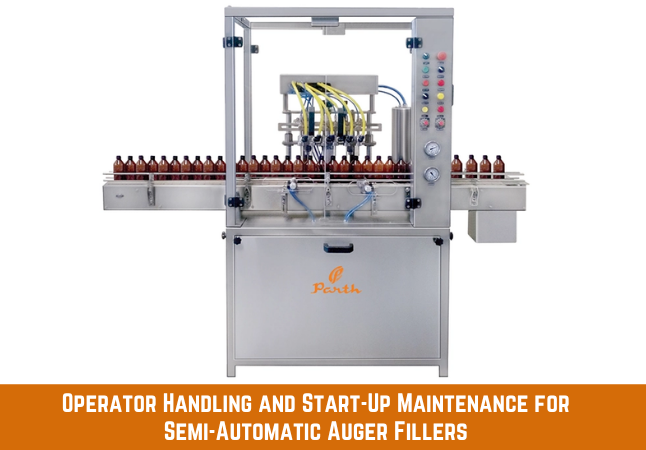
A Semi Automatic Auger Type Powder Filling Machine involves more manual handling - loading containers, triggering the fill cycle and removing filled units - which means operator technique directly affects machine wear. Train operators to load containers gently and align them correctly under the filling head to avoid stressing the nozzle or misaligning the auger shaft. Because semi-automatic units are often used in smaller batch environments, they may sit idle between runs; before restarting after downtime, always check for settled powder in the hopper and confirm the auger spins freely. Treating start-up and shutdown as part of the maintenance routine, not just an afterthought, keeps these machines reliable across intermittent use.
Automatic Auger Filling Machine – Preventive Maintenance Schedules for Continuous Production
High-speed, continuous-run environments depend on an Automatic Auger Filling Machine to maintain throughput without interruption, which makes a documented preventive maintenance schedule essential. Beyond daily cleaning and weekly lubrication, monthly checks should cover sensor alignment, PLC and control panel function, conveyor synchronization and seal integrity on hoppers and dust covers. Quarterly servicing should include a full inspection of drive motors, gearboxes and electrical connections. Logging every maintenance activity - what was checked, what was replaced and when - helps spot recurring issues and plan part replacements before they cause unplanned stoppages on the production floor.
Our Other Product
Automatic Servo Base Volumetric Liquid Filling MachineAuger Filling Machines – Common Wear Parts to Monitor and Replace
Like all mechanical packaging equipment, Auger Filling Machines have predictable wear points. The auger itself, filling tube, hopper gate, seals and gaskets are the parts most exposed to friction and powder abrasion and they should be inspected regularly for scoring, pitting or thinning. Drive belts and couplings also stretch or fatigue with use and should be checked for slack or cracking. Keeping a small inventory of commonly replaced parts on hand - rather than waiting for a failure to order them - minimizes downtime considerably. Many manufacturers offer maintenance kits bundling these wear components for easier, scheduled replacement.

Auger Type Powder Filling Machine – Storage and Environmental Best Practices
The environment surrounding an Auger Type Powder Filling Machine plays a bigger role in its longevity than many operators realize. Excess humidity can cause corrosion on metal surfaces and clumping inside the hopper, while dust accumulation in the surrounding area can find its way back into the mechanism. Keep the installation area climate-controlled where possible, fit dust extraction near the filling station and cover the machine during extended idle periods. Periodically check that electrical enclosures remain sealed against dust ingress, since control panel failures are often traced back to environmental exposure rather than the machine's core mechanics.
Auger Filler – Partnering with the Right Manufacturer for Long-Term Support
No maintenance routine works in isolation - it depends on having a reliable source for genuine spare parts, technical guidance and after-sales service. This is where Parth Engineers & Consultant makes a real difference. As a manufacturer, exporter and supplier of pharmaceutical packaging machinery since 1995, Parth Engineers & Consultant designs and builds a complete range of Auger Type Powder Filling Machines - from Semi Automatic models suited to smaller batch operations to fully Automatic systems engineered for continuous, high-speed production. Their machines are built as part of a complete dry syrup powder filling line, integrating cleaning, filling, sealing, labelling and cartoning into a single, well-coordinated process. Customers benefit from genuine spare parts, technical documentation and round-the-clock customer service and support, which together make routine maintenance far easier to plan and execute.
Conclusion
A consistent maintenance routine is the simplest, most cost-effective way to protect your investment in an Auger Filling Machine. Daily cleaning, regular lubrication, accuracy checks and timely wear-part replacement together prevent most common failures. Partnering with an experienced manufacturer for genuine parts and support makes this routine far easier to sustain. The result is a machine that keeps delivering accurate, reliable fills for years to come.

